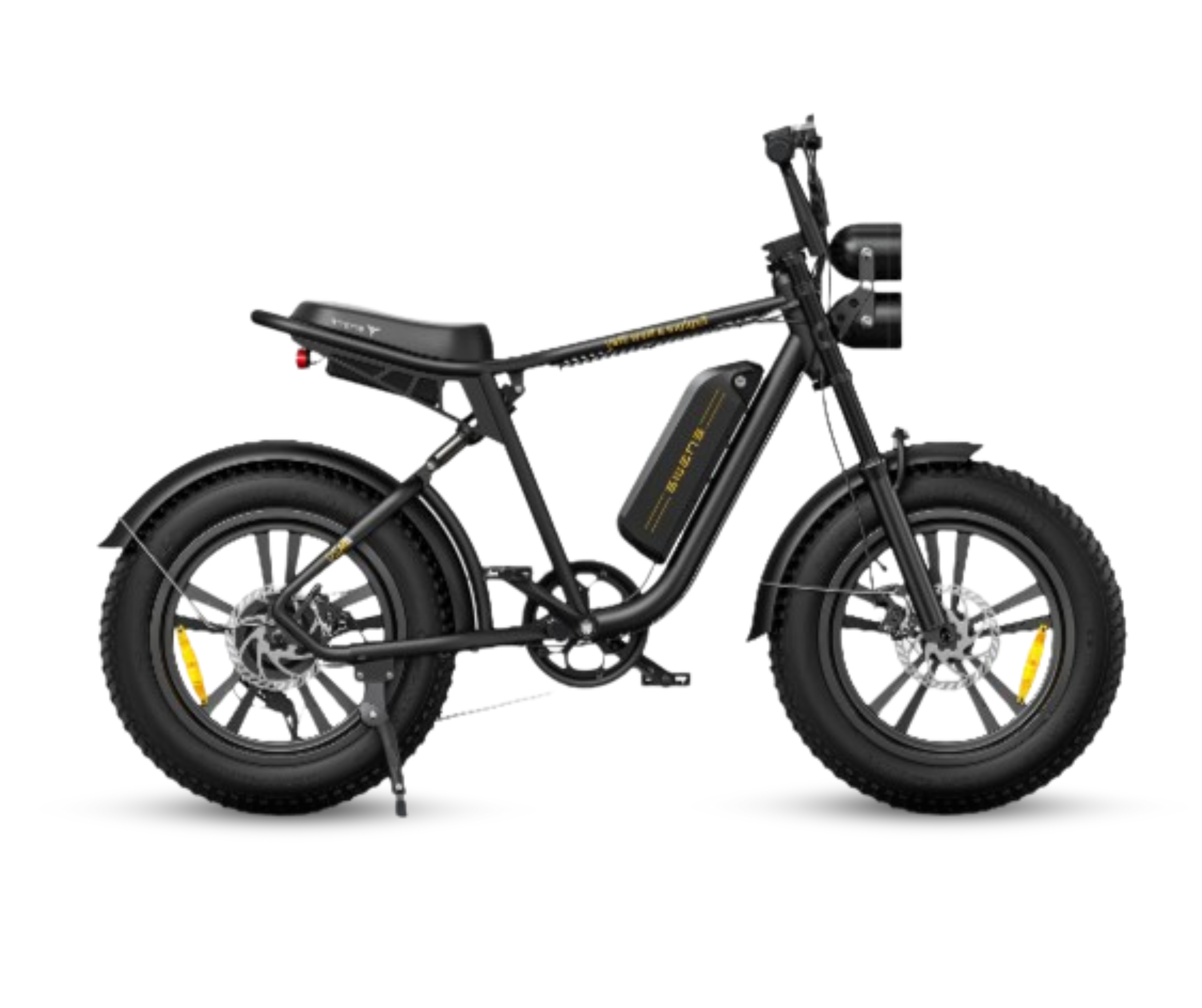

This week, more than 2,500 towns and cities are taking part in European Mobility Week, culminating in World Car Free Day on Monday 22 September — a day when streets across the world are handed back to people instead of traffic.
And this year's theme struck a chord with me: "Mobility for Everyone." The idea that sustainable transport shouldn't depend on your income, your age, or your abilities — that a cleaner, quieter city shouldn't be something only some people can afford to be part of.
That's why, from today, students and NHS staff get 15% off at Uni-trax.
Let me explain why that matters to us, and why this autumn is a genuinely good moment to think about leaving the car at home.
What Car Free Day Is Actually About
World Car Free Day has been running since 2000, and the premise is simple: for one day, cities close roads to traffic and show people what the alternative feels like. Quieter streets. Cleaner air. Space for walking, cycling, and just being somewhere rather than driving through it.
It isn't about guilt-tripping drivers. Plenty of journeys genuinely need a car, and plenty of people have no realistic alternative. The point is narrower and more useful than that: a huge proportion of car journeys are short ones that didn't have to be driven. The school run. The trip to the shops. The three-mile commute. Those are the journeys a bike can absorb — and an e-bike absorbs them without you arriving sweaty, exhausted, or defeated by a hill.
One day a year won't fix a city. But it does something quietly powerful: it lets people find out that the alternative works, and then keep doing it on the 23rd.
Why "Mobility for Everyone" Is the Right Theme
Here's the part I've been thinking about most.
Cycling gets talked about as though it's universally accessible — just get a bike! — and it really isn't. Bikes cost money. Good e-bikes cost more money. And a lot of the people who would benefit most from cheaper, healthier transport are exactly the people with the least room in their budget for a few hundred pounds up front.
Students, for one. And NHS staff — people doing shift work, often travelling at hours when public transport is thin, on salaries that have not kept pace with the cost of living.
These are two groups who move around our cities constantly, who would benefit enormously from cheap and reliable transport, and who frequently can't justify the outlay. That gap is the thing worth doing something about.
The 15% Discount: How It Works
So here it is, plainly:
Students and NHS employees get 15% off at Uni-trax. Just send us proof — a valid student ID or enrolment confirmation, or NHS staff ID — and we'll sort your discount.
How to claim: message us on Instagram, Facebook, or email blux@uni-trax.com with your proof, and we'll send your code.
Why We're Doing It
I'll be honest about the commercial reality: we're a business, and discounts sell bikes. I'm not going to pretend this is pure altruism.
But it's also true that we chose these two groups specifically, and that choice wasn't about margin. It was about who's underserved.
Running Uni-trax across 11 UK stores, you see who comes in and who doesn't. You see people work out the cost of a bike against a month's rent and decide it'll have to wait. You also see the ones who did buy — and come back six months later to tell you they've sold the car, or lost weight, or just stopped dreading the commute.
We'd like more of the second thing. If 15% is the difference between "someday" and "this month" for a student or a nurse, that's a good use of 15%.
The Honest Bit About "Eco"
One more thing, because I'd rather say it than have you assume it.
E-bikes are not magic. Manufacturing a bike has an environmental cost. Batteries use mined materials and eventually need replacing and recycling. Anyone selling you an e-bike as a zero-impact product is overselling.
What is genuinely true is this: an e-bike that replaces car journeys is dramatically less polluting than the car journeys it replaces — no tailpipe emissions, a fraction of the energy, and far less road space and noise. Charging one costs around 13p and uses about as much electricity as boiling a few kettles.
The environmental case isn't "buy a thing and feel good." It's "ride it instead of driving, often, for years." That's where the benefit actually lives — and it's the same place the money-saving and the health benefit live too.
What a City Looks Like When Fewer People Drive
If you want to know why we care about this beyond selling bikes, look at what's happening in London.
The protected Cycleway network has reached 450km — five times its 2016 size, and now longer than the entire Tube network. Cycling is up around 43% since 2016, with roughly 1.5 million daily journeys. And as more people have started riding, it's got safer, not more dangerous.
That's a city changing shape, one journey at a time. The Netherlands and Denmark did the same thing starting in the 1970s — those cycling cultures were built, not inherited. And Britain itself was a cycling nation once: 15% of all trips were by bike in 1950, falling to around 1.3% as we rebuilt everything around the car.
None of that reverses because of one discount or one awareness day. It reverses because enough individual people decide, on enough ordinary mornings, to take the bike.
Three Things You Could Do This Week
You don't need to sell your car or overhaul your life. Try one of these:
1. Pick one journey and don't drive it. The shortest, most annoying one — the trip where parking is a nightmare anyway. Do it by bike and see how it compares.
2. Ride on Monday 22nd. Car Free Day. Even if it's just to the shops. The point is finding out what it's like.
3. Work out what a year of not driving that journey would cost you. Our running-cost guide does the maths: an e-bike costs roughly £10–£15 a month to run, against well over £1,300 a year in petrol alone for an average driver.
Autumn is honestly a lovely time to start. The air is crisp, the light is good, and — with a bit of preparation — it carries right through the cold months.
The Takeaway
Car Free Day is one day. What we'd rather build is the other 364.
Better cities aren't made by campaigns; they're made by ordinary people choosing bikes over cars for the journeys where a bike genuinely works. Our job is to make that choice easier, cheaper, and more appealing — which is why students and NHS staff now get 15% off, and why we'll keep looking for ways to widen that further.
If you're a student or you work for the NHS: get in touch, send us your proof, and let's get you riding.
And if you're neither — take Monday off from the car anyway. See what the city sounds like.
▶ Explore our e-bikes · Find your nearest store for a free test ride.
Students & NHS staff: message us on Instagram or Facebook, or email blux@uni-trax.com with your proof to claim your 15%.
▶ Subscribe to the newsletter for 10% off your entire order.
Keywords: student discount e-bike UK NHS discount e-bike World Car Free Day 2026 European Mobility Week car free living UK sustainable commuting eco friendly transport UK Uni-trax discount