
Think about how you learned to drive. If you're in Britain, there's a decent chance it was a manual — clutch, gearstick, stalling at junctions, the whole ordeal. Now look at what's on the road. Automatics have quietly taken over, and almost nobody who switched has gone back.
Bicycles are at roughly the same moment, and most people haven't noticed yet.
Gear shifting is the last genuinely awkward part of riding a bike. It's the thing new riders get wrong, experienced riders occasionally fumble, and everybody has to think about. And over the past few years, the bike industry has quietly worked out how to remove it.
What's interesting isn't that automatic shifting exists — it's been around for years. It's who can now afford it. That's where ADO comes in, and it's a more interesting story than the usual spec-sheet chatter.
First: Why Shifting Is the Last Friction
Everything else about cycling has got easier. Hydraulic brakes made stopping effortless. Belt drives removed the oily chain. Electric assist flattened the hills. Torque sensors made the power delivery feel natural.
Shifting stayed manual — and it's genuinely the fiddliest thing left:
- You have to anticipate. Shift too late on a hill and you're grinding to a halt with nowhere to go.
- You have to remember. Stop in a high gear and your next pull-away is a leg-breaker.
- It's a learned skill. Plenty of adults who cycle regularly still don't fully understand when to shift or why.
- It's one more thing to do in traffic, when your attention should be on the road.
On a normal bike, the effort of pedalling gives you constant feedback about gear choice. On an e-bike the motor masks that feedback — so riders often sit in the wrong gear without realising, which wastes battery and wears the drivetrain. E-bikes actually made the gear problem worse. Which is exactly why they're where automation arrived first.
Automatic Shifting Isn't New — It's Just Been Expensive
Here's the part usually left out of the marketing: this technology has existed for years.
Enviolo launched its Automatiq system back in 2019 — a continuously variable hub that holds your chosen cadence automatically, with no steps or gears at all. Shimano introduced Auto Shift with its XT Di2 groupset in 2022, adding FreeShift, which lets the bike change gear while you're coasting. SRAM followed in 2023 with auto-shifting built into its Eagle Powertrain. Bosch's eShift ties automatic shifting into internal hubs from Enviolo, Rohloff and Shimano. This year Shimano even showed a concept that brings automatic shifting to conventional, non-electric bikes using a dynamo hub to power itself.
So the technology is proven, and the big names are all in.
The catch has always been price. Enviolo Automatiq systems typically appear on e-bikes starting around $5,000. Shimano's Di2 auto-shift setups are generally seen on $4,000+ machines. Rohloff's E-14 turns up on $6,000+ touring bikes.
In other words: the feature that most benefits inexperienced, casual, and everyday riders has been almost exclusively available to people spending four to six thousand pounds on a bike. Which is, when you say it out loud, completely backwards.
What ADO Actually Did
ADO's contribution isn't inventing automatic shifting. It's putting it on bikes ordinary people buy.
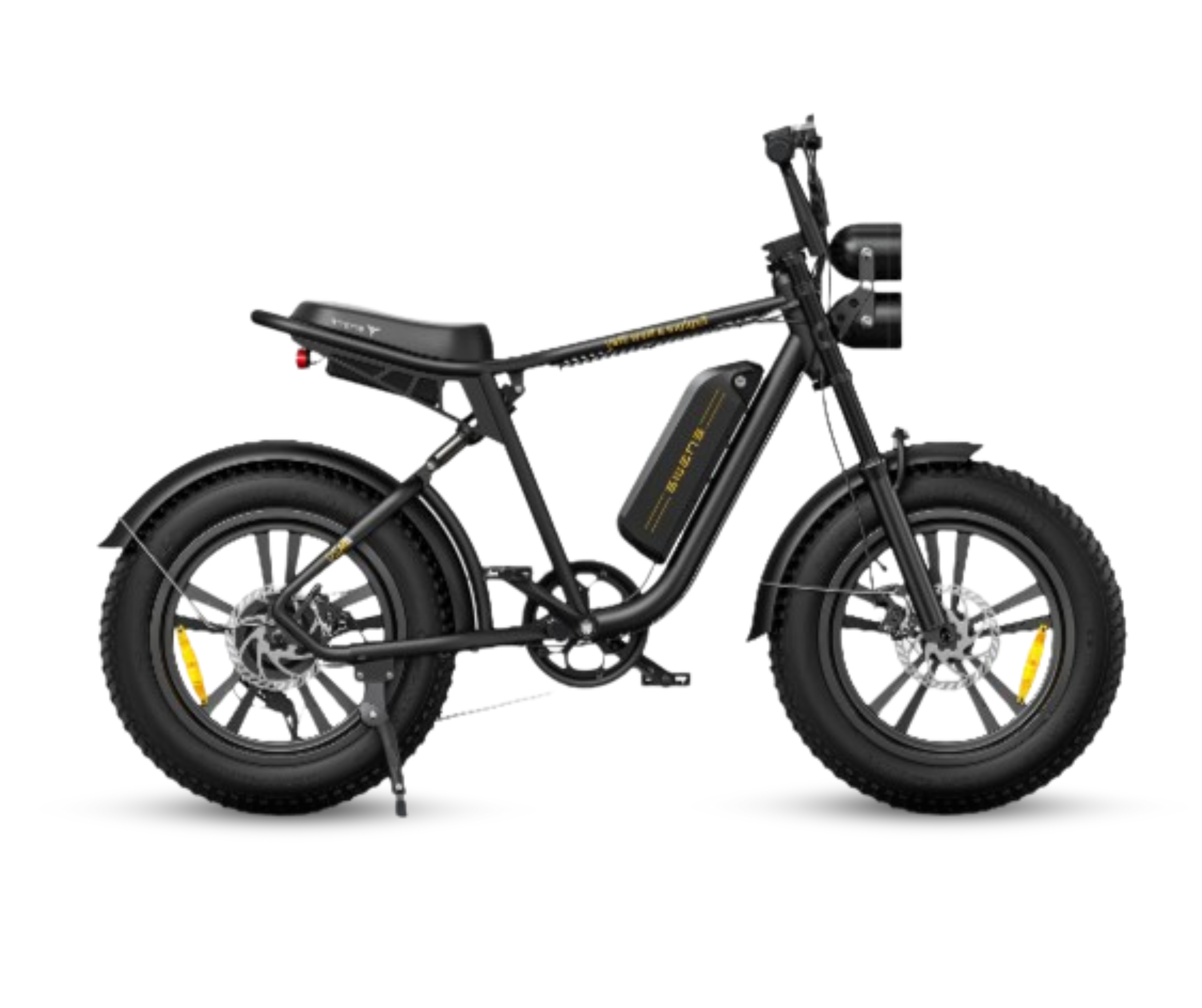
The Air series — the Air 20 Pro, Air 28 Pro, and the flagship Air 20 Ultra — use a BAFANG auto-shift motor with an internal geared system that changes gear based on your speed and effort. No shifters on the bars. No cassette hanging off the back. On the Air 20 Pro, the motor steps up to second gear around 18–19 km/h and holds a sensible cadence for you. The Air 20 Ultra runs a three-speed version with more torque behind it.
Crucially, ADO pairs it with a dual-sided torque sensor, so the assistance and the gear change are working from the same information — how hard you're actually pushing. That's why it doesn't feel like a machine making decisions at you. Reviewers and owners consistently describe the shifts as barely noticeable, without the "clunk" people expect from the word "automatic."
And it sits on bikes costing a fraction of the systems above — well under £2,000, with a carbon belt drive included so there's no chain to maintain either.
That's the actual story here: not a technical first, but a price first. The same shift that happened with hydraulic brakes and torque sensors — premium feature, then mainstream feature, then just how bikes are.
Who This Genuinely Suits — and Who Will Hate It
I'd rather be honest than evangelical, so:
Auto-shift is brilliant if you:
- Are returning to cycling after years away, or have never been confident with gears
- Ride in stop-start city traffic where you're constantly changing speed
- Commute and want to think about the road, not the drivetrain
- Value low maintenance (pair it with a belt drive and there's almost nothing to service)
- Ride with anyone who finds gears confusing — it removes a real barrier
You'll probably dislike it if you:
- Enjoy the mechanical engagement of riding and want to choose your gear
- Ride hard on varied terrain where you want to pre-empt a climb rather than react to it
- Prefer a wide-range derailleur setup — internal auto-shift systems have fewer gears than an 8- or 11-speed cassette
- Want a system you can fix yourself anywhere (automation means electronics)
That last point deserves emphasis. Fewer gears is a real trade-off. A 2- or 3-speed auto-shift system isn't matched to the range of a full cassette, which is part of why these bikes suit flat-to-rolling city riding better than serious hills. Worth knowing before you buy.
So Will Gears Actually Disappear?
Probably not entirely — and I'd be sceptical of anyone who told you otherwise.
The car analogy is tempting but imperfect. Cycling has a large enthusiast population who genuinely enjoy the mechanical involvement, in a way that few people enjoy operating a clutch. Derailleurs are cheap, light, repairable anywhere in the world, and offer gear ranges that automatic systems can't yet match. For sport riding, they're going nowhere.
But for the bikes most people actually use — commuters, city bikes, e-bikes bought to replace car journeys — the direction looks clear. Every major component manufacturer is now building automatic shifting. Prices are falling. And once someone has ridden a bike that handles its own gears, going back to remembering to shift feels like an unnecessary chore.
My prediction, for what it's worth: within a few years, automatic shifting on an everyday e-bike will feel as normal as hydraulic brakes do now — and we'll wonder why we accepted the fiddly version for so long.
The Takeaway
The interesting thing about ADO's auto-shift bikes isn't the technology. It's the timing and the price.
Automatic shifting has been quietly proven for years on bikes costing as much as a used car. What's changed is that it's now available on a well-made commuter with a belt drive and a torque sensor, for a fraction of that — which is the point at which a clever feature stops being a curiosity and starts changing what ordinary riding feels like.
If you've ever been put off cycling because gears felt like homework, this is genuinely the development to pay attention to.
▶ Explore ADO at Uni-trax · Find your nearest store for a free test ride.
Curious how it feels? Come and ride one — five minutes is enough. Or ask me on Instagram, I'll talk about this for longer than anyone wants.
▶ Subscribe to the newsletter for 10% off your entire order.
Keywords: automatic shifting e-bike auto shift bike ADO auto shift BAFANG auto shift do e-bikes need gears Enviolo Automatiq Shimano Di2 auto shift best e-bike for beginners