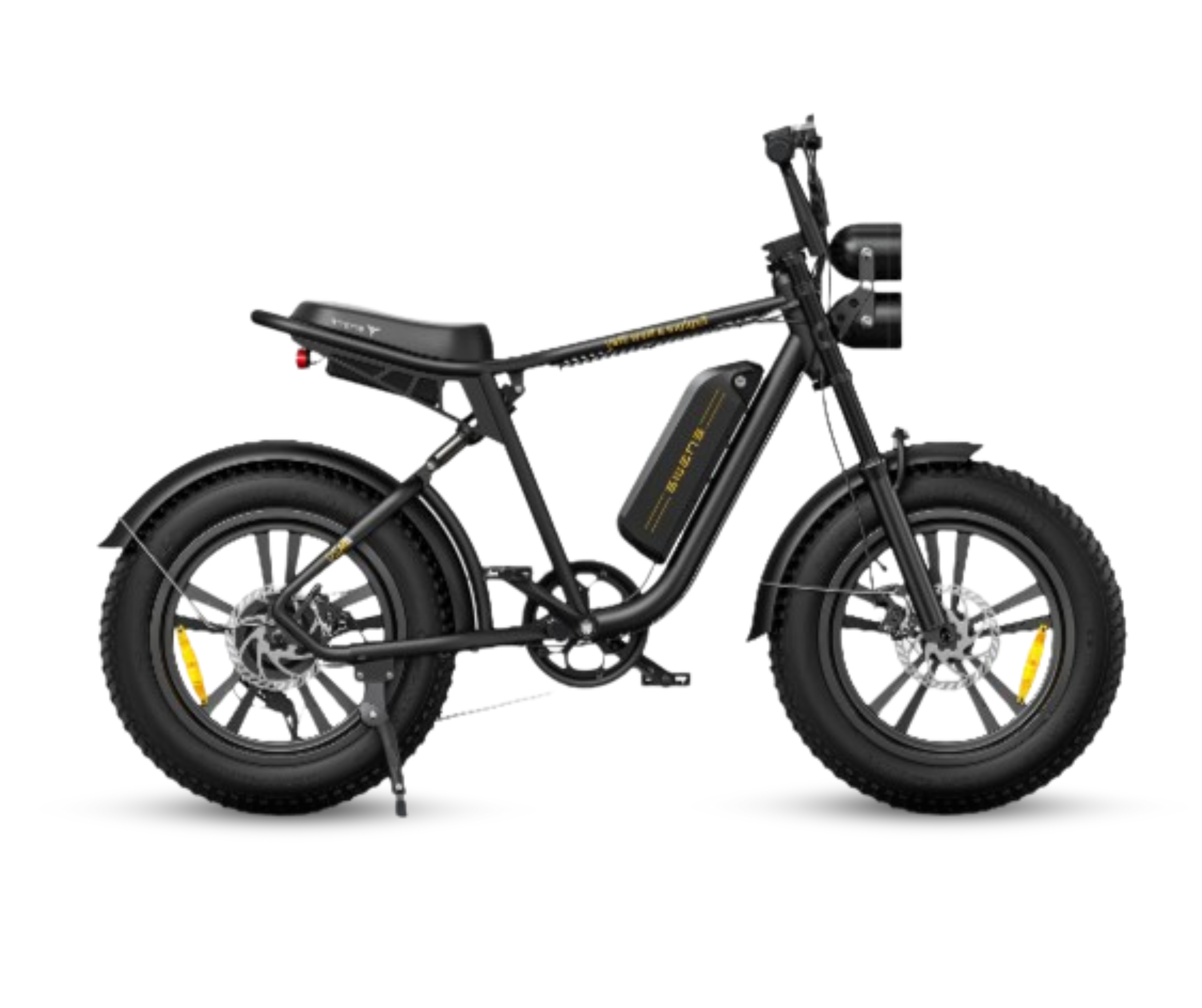

There's a particular feeling to the end of summer. The evenings draw in, the mornings turn crisp, and a little voice starts whispering that maybe it's time to put the bike away until spring.
Here's why you shouldn't — and why this autumn might be the moment your e-bike stops being a summer toy and becomes something far more useful: your everyday way of getting around.
It's a shift that whole nations have made. The Netherlands and Denmark — the countries we now think of as cycling paradises — weren't born that way. They chose it, built it, and never looked back. And the surprising truth is that Britain was once a cycling nation too. So as the seasons turn, let's talk about riding through autumn, and whether the UK might be quietly pedalling toward a Dutch-style future of its own.
Table of Contents
- The End-of-Summer Temptation (and Why to Resist It)
- The Myth: Cycling Nations Were "Just Born That Way"
- How the Dutch and Danes Actually Did It
- Britain Was Once a Cycling Nation Too
- Why the E-Bike Changes Everything
- Making the Autumn Transition: A Practical Guide
- Your Part in the Shift
- FAQs
The End-of-Summer Temptation (and Why to Resist It)
Every autumn, millions of bikes get wheeled into sheds and left there until the clocks go forward again. It's understandable — but it's also a shame, because it turns cycling into a fair-weather hobby rather than what it could be: a genuinely practical, year-round way to live.
The countries that cycle most don't stop when the weather turns. In the Netherlands and Denmark, people cycle through autumn rain, winter frost, and grey November mornings — not because they're hardier than us, but because cycling is simply how they get around. It's woven into daily life, whatever the sky is doing.
And here's the thing: with the right kit and an e-bike doing the hard work, autumn riding in Britain is not only doable — it's genuinely lovely. But more on that shortly. First, let's bust a myth.
The Myth: Cycling Nations Were "Just Born That Way"
Ask most people why the Dutch cycle so much and they'll shrug: "It's just their culture." It's flat, they'll add, and they've always done it.
That's almost entirely wrong — and the real story is far more encouraging. Danish and Dutch cities could easily have been dominated by the automobile. Bicycle dominance was not inevitable. In fact, both countries came remarkably close to paving over cycling entirely. ResearchGate
After the Second World War, the rise of motor vehicles confined cyclists to the margins, with some cycle paths removed to widen roads for cars. The numbers are striking: in the Netherlands, there were 139,000 cars in 1950; twenty years later there were 3.4 million. Amsterdam started knocking down buildings to widen roads for motor vehicles and removed some of the early bicycle infrastructure that was in place. City squares became parking lots. upiResearchGate
In other words, the great cycling nations were once heading in exactly the same car-dominated direction as everyone else. What they did next is the lesson.
How the Dutch and Danes Actually Did It
The turning point came in the 1970s, and it was a deliberate choice, not an accident of culture. As rising traffic made cycling more dangerous and cities more congested, public pressure mounted for change. The prevalence of cycling in these countries didn't happen overnight — or by accident. Campaigning, urban planning, political support and investment all had roles to play. upi
What followed was decades of steady, deliberate investment in making cycling safe and easy:
- Separated, protected bike paths. The Netherlands now has 35,000km of cycle paths, while Denmark has 12,000km. upi
- Traffic calming. In both countries, traffic-calming measures have restricted or banned cars on residential streets and imposed speed limits. upi
- Redesigned junctions with dedicated signals to keep cyclists safe.
And the payoff? It's staggering. In Denmark, 9 out of 10 people own a bike, while the Netherlands has an estimated 16.5 million bikes in a country of 17.3 million people. upi
The lesson for Britain is genuinely hopeful: a cycling culture isn't something you're born with. It's something you build — journey by journey, path by path, choice by choice.
Britain Was Once a Cycling Nation Too
Here's the part most people don't know, and it reframes everything: the UK used to cycle just as much.
In the UK, 15% of all trips were taken by bike in 1950 — a figure that plummeted to just 1.3% of trips in the decades that followed. We didn't lose cycling because it didn't suit us. We lost it the same way the Dutch nearly did — by building our towns and habits around the car instead. upi
But that history cuts both ways. If Britain was a cycling nation once, there's nothing fundamental stopping it becoming one again. The Dutch and Danes prove the direction of travel can be reversed. And this time, we have something they didn't have in the 1970s: the electric bike.
Why the E-Bike Changes Everything
The e-bike is the single biggest reason Britain's cycling future looks different from its recent past. It quietly dissolves the excuses that kept people in cars.
- "It's too hilly here." Not on an e-bike. The motor flattens the climbs that put people off — which matters far more in hilly Britain than in the pancake-flat Netherlands.
- "I'll arrive sweaty." Not at 15.5 mph with pedal assist. You arrive fresh, in your work clothes, ready for the day.
- "It's too far." An e-bike doubles a comfortable cycling range, turning a "too far to cycle" commute into an easy 30 minutes.
- "I'm not fit enough." The assist meets you where you are. E-bikes get people cycling who haven't ridden in years — or ever.
- "Not with the shopping / the kids." Cargo and family e-bikes carry both, easily.
This is why e-bikes are the fastest-growing part of UK cycling. They don't ask you to become a Lycra-clad athlete — they just make everyday journeys easy, for everyone. They're the bridge between "I own a bike" and "I get around by bike."
And crucially, they make year-round riding realistic — because when the effort is low and the journey is quick, a bit of autumn chill is no barrier at all.
Making the Autumn Transition: A Practical Guide
So how do you actually keep riding as summer fades? It's easier than you'd think — a few small adjustments turn autumn from a barrier into some of the best riding of the year (crisp air, golden light, empty paths).
Be seen. The single most important autumn change. Fit good front and rear lights, and consider reflective or hi-vis details. Darker mornings and evenings mean visibility is everything.
Stay dry. A decent waterproof jacket and mudguards transform wet-weather riding from miserable to genuinely fine. Mudguards especially — they're the difference between arriving clean and arriving splattered.
Adjust for the conditions. Wet roads mean longer braking distances and more caution on leaves and painted lines. Ease off the pace a little; hydraulic disc brakes (on most quality e-bikes) handle the wet well.
Look after your battery. Cold reduces range, so expect a little less in winter, charge indoors at room temperature, and don't leave the battery in a freezing shed overnight. Our battery care advice helps here.
Keep it clean. Autumn brings mud, wet leaves, and road grime. A quick wipe-down and occasional check keeps everything running smoothly — our maintenance guide covers it.
Layer up. A light, packable layer and some gloves make chilly mornings comfortable. You warm up fast once you're moving — dress for five minutes in, not for standing still.
Get these sorted, and autumn riding isn't an endurance test. It's a pleasure.
Your Part in the Shift
It's easy to think a national cycling culture is something that happens to you — a matter of government budgets and council bike lanes. And infrastructure genuinely matters. But the Dutch story shows culture also grows from the ground up: from ordinary people deciding, journey by journey, that two wheels beat four.
Every time you take the e-bike instead of the car — for the commute, the school run, the trip to the shops — you're part of that shift. You're one more bike on the road normalising cycling for the next person. You're proof it works. That's how 1.3% creeps back up; that's how a car-first country slowly remembers it used to be something else.
You don't have to wait for Britain to become the Netherlands. You can just... ride. This autumn is as good a time as any to start.
Frequently Asked Questions
Can I really use an e-bike through autumn and winter?
Absolutely — with lights, mudguards, a waterproof, and a little battery care, year-round riding is entirely practical. It's exactly what people do in the Netherlands and Denmark, whatever the weather.
Why did the UK stop being a cycling nation?
It didn't lack the appetite — 15% of UK trips were by bike in 1950, falling to around 1.3% as towns and habits were rebuilt around the car. The Dutch and Danes faced the same pressures but chose to invest in cycling instead.
How did the Netherlands and Denmark become cycling nations?
Through deliberate choice, not inherited culture. From the 1970s they invested in protected bike paths, traffic calming, and safe junctions — 35,000km of cycle paths in the Netherlands, 12,000km in Denmark. It was built, not born.
Does an e-bike help in a hilly area?
Enormously — the motor flattens climbs, which makes e-bikes even more transformative in hilly Britain than in the flat Netherlands. Hills are one of the biggest reasons people don't cycle, and e-bikes remove that barrier.
How does cold weather affect my e-bike battery?
Cold temporarily reduces range. Charge and store the battery indoors at room temperature, don't leave it in a freezing shed, and expect a bit less range in deep winter — it returns as it warms up.
What do I need to start commuting by e-bike this autumn?
Lights, mudguards, a waterproof jacket, a good lock, and gloves. That's most of it. Add an e-bike that suits your commute, and you're ready to ride year-round.
The Takeaway: A Cycling Nation Is Built One Ride at a Time
The Netherlands and Denmark aren't cycling paradises by luck or geography. They chose it, built it, and stuck with it — reversing the very same car-first slide that Britain went through. And since the UK was once a cycling nation itself, there's every reason to believe it could be again.
The e-bike is what makes it realistic this time: it flattens the hills, shortens the distances, and removes the excuses — for everyone, not just the fit and the fearless. So as the leaves turn, don't put your bike away. Keep riding. Make it your everyday. You might just be part of the shift that brings British cycling full circle.
▶ Explore our e-bikes at Uni-trax · Find your nearest store for a free test ride.
Riding through autumn? Show us on Instagram — we love seeing Uni-trax bikes out in all weathers.
▶ Subscribe to the newsletter for 10% off your entire order.
Article keywords
e-bike autumn commuting year-round e-bike riding UK cycling culture Netherlands cycling culture Denmark cycling e-bike everyday transport autumn cycling UK e-bike winter riding cycling nation UK Uni-trax