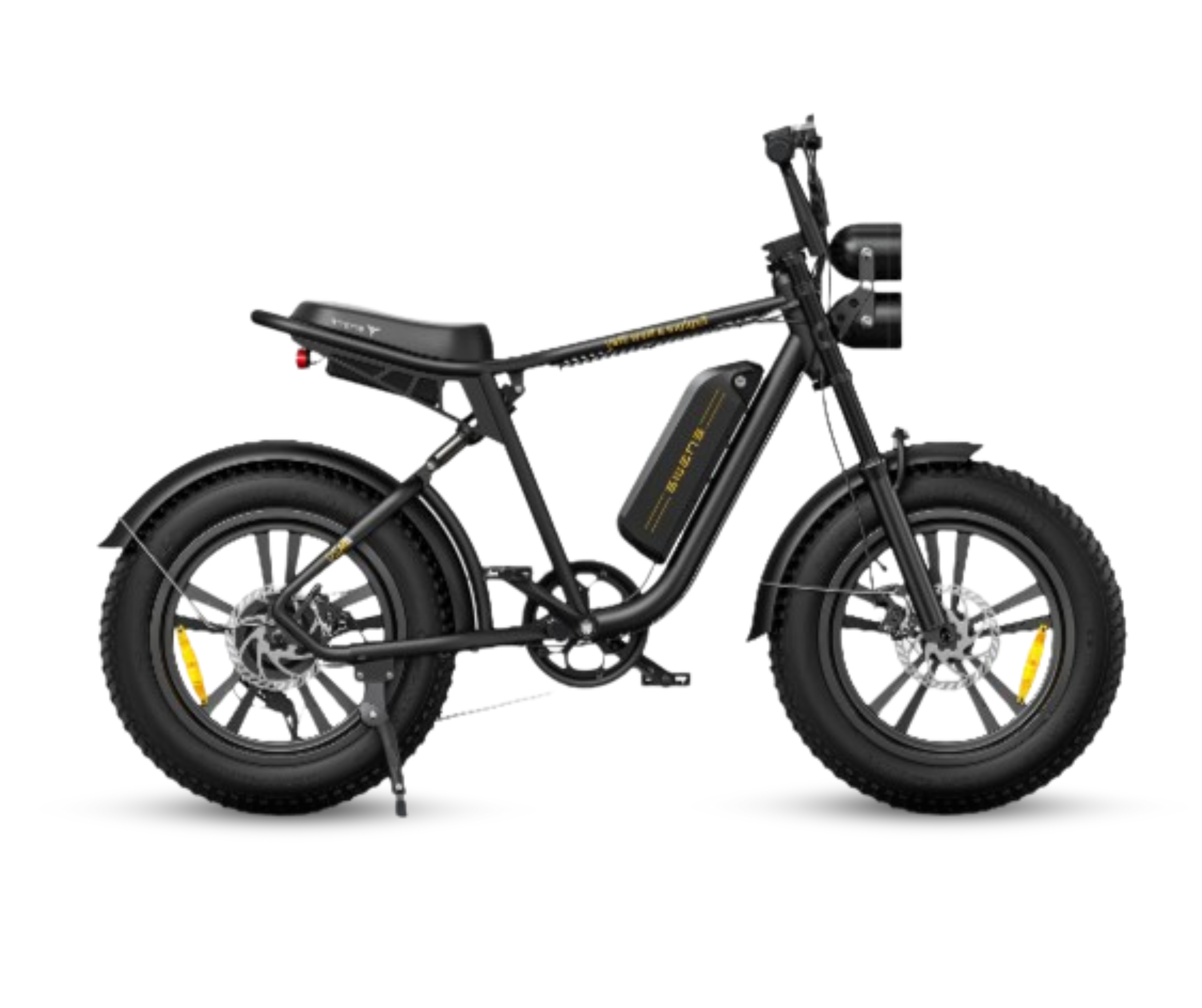

ADO has become one of our most popular brands, and it's not hard to see why. Every bike in the range shares the same philosophy: take the friction out of cycling. Carbon belt drives instead of oily chains. Torque sensors instead of crude on/off assistance. Folding frames. And on the newer models, automatic gears that shift for you.
But with Air 20s, Air 28s, Pros, Ultras and Carbons in the line-up, working out which one you want can take a minute.
Here's the good news: the ADO range is simpler than it looks. Once you've answered three questions, you'll be down to one or two bikes. Let's go.
And whenever you're ready, subscribe to the Uni-trax newsletter for 10% off your entire order.
Table of Contents
- What Every ADO Has in Common
- The Three Questions
- Question 1: Big Wheels or Small?
- Question 2: How Much Automation?
- Question 3: How Light Does It Need to Be?
- The Models, One by One
- The Range at a Glance
- FAQs
What Every ADO Has in Common
Before the differences, the things you get across the range — because they're the reason people choose ADO in the first place:
- Carbon belt drive — no oil, no rust, no black marks on your trousers. ADO rates it up to 30,000 km maintenance-free.
- Torque sensor — assistance matched to how hard you're actually pedalling, so the power feels like an extension of your legs rather than a switch flicking on.
- Hydraulic disc brakes — strong and reliable in the wet.
- A folding frame across the Air line, so storage and car boots aren't a problem.
- UK-legal 250W EAPC — 15.5 mph assist limit, no licence, tax, or insurance needed.
- Tracker support — AirTag and SmartTag compatibility on the newer models.
So wherever you land in the range, you're getting a low-maintenance, natural-feeling, road-legal folding e-bike. The rest is about matching the details to you.
The Three Questions
Answer these and you've essentially chosen:
- Big wheels or small? (28-inch full-size, or 20-inch folder)
- How much automation do you want? (single-speed, 2-speed auto, or 3-speed auto)
- How light does it need to be? (how often will you actually lift it?)
That's it. Let's take them in order.
Question 1: Big Wheels or Small?
Choose 28-inch (the Air 28 range) if you want a full-size bike feel — stable, planted, carrying speed well, comfortable over distance. Big wheels roll over bumps better and feel reassuring in traffic. The trade-off is a larger bike, even folded.
Choose 20-inch (the Air 20 range) if storage, portability, or car boots matter. Twenty-inch folders are nippier in traffic, fold smaller, and are generally lighter. The trade-off is a slightly busier ride over rough surfaces.
Rule of thumb: storage-constrained or frequently folding it? Go 20. Riding longer distances on open roads? Go 28.
Question 2: How Much Automation?
This is the genuinely interesting decision, and it's where ADO is doing something most brands aren't.
Single-speed (Air 20, Air 28). No gears at all. The torque sensor does the work, matching assistance to your effort. Simpler, lighter, nothing to go wrong — and for flat-to-gentle terrain it's perfectly judged.
2-speed auto (Air 20 Pro, Air 28 Pro). A BAFANG H700 motor with a 2-speed automatic gearbox. It shifts for you based on speed and effort — typically stepping up around 18–19 km/h — so pulling away from lights and tackling moderate inclines is easier. 40 N·m of torque.
3-speed auto (Air 20 Ultra). The flagship: BAFANG's 2nd-gen H730 with three automatic gears and 50 N·m — 25% more torque than the Pro, and a wider spread for hills.
How to decide: if your route is flat and short, single-speed is elegant and cheaper. If you deal with inclines, stop-start traffic, or simply want the smoothest possible experience, the auto-shift models are a genuine upgrade — and once you've ridden one, going back to remembering to change gear feels like unnecessary work.
Question 3: How Light Does It Need to Be?
Be honest about this one, because it's the spec people regret most.
If you're carrying the bike up stairs regularly, onto trains, or into a flat, every kilo counts — look at the Air 20S (18.5 kg) or the Air Carbon, ADO's lightest options.
If you're rolling it into a hallway or a garage, the difference between 18 kg and 21 kg barely registers, and you're better off spending the money on battery, torque, or automation instead.
The Models, One by One
ADO Air 28 — £999 (was £1,299)
Best value in the range, and our easiest recommendation.
A full-size 28-inch e-bike with a 250W rear hub motor, torque sensor, carbon belt drive, and AirTag/SmartTag support — at under a thousand pounds. The large wheels give a stable, planted, genuinely comfortable ride that's confident at speed and reassuring in traffic. Around 18 kg.
Choose it if: you want a relaxed, comfortable full-size commuter with almost no maintenance, at the keenest price in the range.
ADO Air 20 — £1,359
The classic compact folder.
Lightweight aluminium folding frame, 250W motor, Samsung 36V/9.6Ah battery with up to 100 km range, hydraulic discs, carbon belt, and torque sensor. Single-speed by design — ADO's view is that with a smart torque sensor calculating speed, cadence and torque simultaneously, multiple gears aren't necessary, and the single-gear setup keeps the bike lighter and quieter.
Choose it if: you want a simple, proven, low-maintenance 20-inch folder for city riding.
ADO Air 20S — the lightweight folder
18.5 kg — the light one.
Same ADO philosophy in a deliberately lighter package. If you're lifting your bike regularly, this is where to look in the 20-inch range.
Choose it if: weight is your priority and you carry the bike often.
ADO Air 20 Pro — £1,399 (was £1,599)
Auto-shift in a compact folder.
BAFANG 250W rear hub with a 2-speed automatic gearbox (H700), 40 N·m, dual-sided torque sensor, Eco and Sport modes via the ADO Smart App, a seatpost-integrated removable battery (36V/9.6Ah, up to 100 km), adjustable lockout suspension fork, and the carbon belt. Dutch-style folding frame, 20×1.95" tyres.
Choose it if: you want automatic gears, a comfortable upright ride, and the convenience of a removable battery you can charge indoors.
▶ See the ADO Air 20 Pro — £1,399
ADO Air 20 Ultra — £1,399 (was £1,499)
The flagship, and currently the smartest buy in the range.
BAFANG's 2nd-gen H730 with 3-speed auto-shift and 50 N·m — a meaningful step up from the Pro's 40 N·m — plus a 370Wh battery, TEKTRO hydraulic discs, fully integrated front and rear lights (170 lm headlight), the AQS 2.0 quick-release system for tool-free baskets and racks, and reflective-sidewall 20×2.0" tyres. Around 20 kg, 120 kg max load.
At the current price it sits level with the Air 20 Pro while offering more gears, more torque, and a bigger battery — which makes it, right now, the obvious pick of the two.
▶ Read our full Air 20 Ultra deep dive · See the Air 20 Ultra — £1,399
ADO Air 28 Pro — from £1,299 (was £1,699)
Auto-shift, full-size.
The Air 28's comfortable big-wheel platform with the 2-speed auto-shift motor added. For many riders this is the sweet spot of the whole range: the stability and speed of 28-inch wheels, plus gears that look after themselves.
Choose it if: you want the most relaxed, effortless everyday ride ADO makes — big wheels, automatic gears, belt drive, nothing to maintain.
▶ See the ADO Air 28 Pro — from £1,299
ADO Air Carbon
The lightest and most premium.
A carbon-framed folder for riders who want the lowest possible weight and the most refined object in the range.
Choose it if: weight and materials matter above all else.
Combo deals — two bikes, one price
If you're buying for a household, the combos are where the savings are:
- Air 20 Pro + Air 28 Pro — £2,798 (was £2,998)
- Air 20 Ultra combo — £3,498 (was £3,598)
- Air 20S combo — £2,498 (was £2,598)
The Range at a Glance
| Model | Price | Wheels | Gears | Best for |
|---|---|---|---|---|
| Air 28 | £999 | 28" | Single | Best value, comfortable full-size |
| Air 28 Pro | from £1,299 | 28" | 2-speed auto | Effortless full-size commuting |
| Air 20 | £1,359 | 20" | Single | Simple compact folder |
| Air 20 Pro | £1,399 | 20" | 2-speed auto | Auto-shift in a folder |
| Air 20 Ultra | £1,399 | 20" | 3-speed auto | Flagship — most torque & range |
| Air 20S | — | 20" | Single | Lightest 20" (18.5 kg) |
| Air Carbon | — | 20" | Single | Lightest & most premium |
Prices correct at time of writing; several are on sale.
Frequently Asked Questions
Which ADO is best value?
The Air 28 at £999 — a full-size, belt-driven, torque-sensor e-bike with tracker support for under a grand is a lot of bike for the money.
Which ADO should I buy for hills?
The Air 20 Ultra, with 50 N·m and three automatic gears. The 2-speed Pro models (40 N·m) handle moderate inclines well; for anything steep, the Ultra is the one.
What's the difference between the Air 20 Pro and the Air 20 Ultra?
The Ultra has three automatic gears instead of two, 50 N·m instead of 40 N·m, a larger 370Wh battery, integrated lighting, and the AQS 2.0 quick-release system. At current pricing they're the same price, which makes the Ultra the stronger buy.
Do ADO bikes really not need gears?
The single-speed models genuinely work well on flat-to-gentle terrain, because the torque sensor reads speed, cadence and pedal force together and adjusts assistance accordingly. If you have hills or lots of stop-start riding, an auto-shift model will suit you better.
What is a carbon belt drive, and is it better than a chain?
A belt replaces the metal chain. It needs no oil, doesn't rust, runs quietly, and ADO rates it up to 30,000 km maintenance-free. The trade-off is that it requires a compatible frame and can't be used with derailleur gears — which is why ADO pairs it with single-speed or internal auto-shift systems.
Are ADO e-bikes road-legal in the UK?
Yes — every ADO we sell is a UK-legal 250W EAPC with a 15.5 mph (25 km/h) assist limit. No licence, tax, or insurance required.
Can I take an ADO on the train?
Yes — the Air range folds, and folding e-bikes are permitted where non-folding ones are banned, including much of the TfL network. See our train rules guide.
Are ADO bikes waterproof?
The key electronic components are at least IPX5 water-resistant, with IPX7 displays on some models. They're fine to ride in the rain — just don't leave them standing out in it.
The Takeaway: Three Questions, One Bike
The ADO range looks complicated and isn't. Big wheels or small. How much automation. How light. Answer those and you're there:
- Best value overall → Air 28, £999
- Most effortless full-size ride → Air 28 Pro, from £1,299
- Simple compact folder → Air 20, £1,359
- Flagship folder, most capable → Air 20 Ultra, £1,399
- Lightest to carry → Air 20S or Air Carbon
And whichever you pick, you get the things that make ADO ADO: a belt drive you never oil, a torque sensor that makes the motor feel like your own legs, and a bike that folds away when you're done.
Still deciding? Come and ride a couple — the difference between single-speed and auto-shift takes about thirty seconds to understand from the saddle.
▶ Explore the full ADO range · Find your nearest store for a free test ride.
Not sure which is yours? Message us on Instagram or Facebook — tell us how you'll ride and we'll point you to the right one.
▶ Subscribe to the newsletter for 10% off your entire order.
Keywords: which ADO e-bike ADO range guide ADO Air 20 vs Air 28 ADO Air 20 Ultra ADO Air 28 Pro best ADO e-bike ADO auto shift ADO buying guide