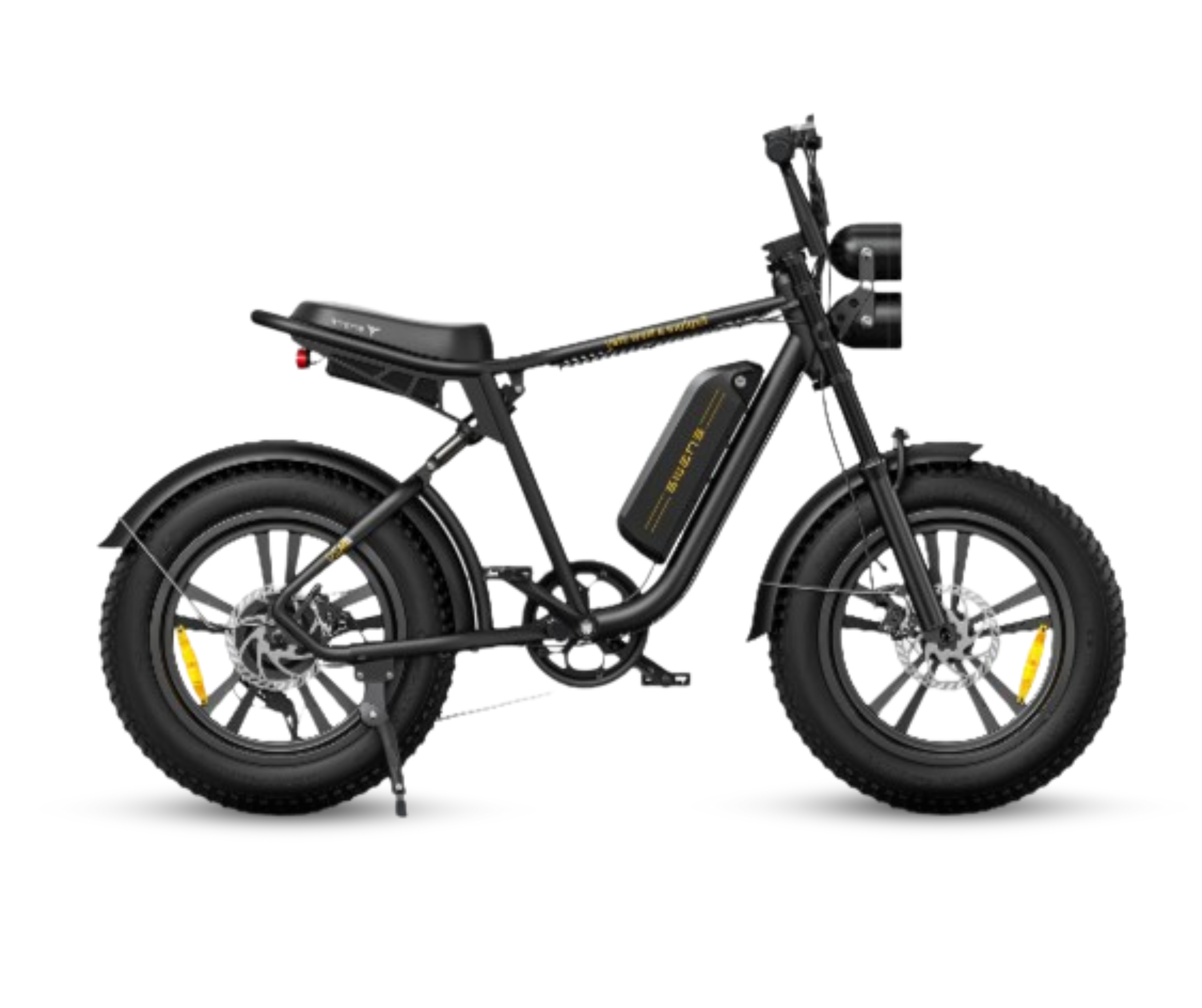

So you're thinking about buying an e-bike. Welcome — you're joining one of the fastest-growing groups of riders in Britain. UK e-bike sales have grown roughly 60% over the last five years, and 2026 is shaping up to be the year more people than ever swap a stuffy commute, an expensive car journey, or a forgotten gym membership for the sheer joy of riding an electric bike.
But here's the catch: buying your first e-bike is overwhelming. Folding or full-size? Carbon or aluminium? Step-through or crossbar? 250W is enough — but how many Watt-hours of battery? Is it legal? Will it last? And what on earth is the difference between ADO, Fiido, and Engwe?
We get asked these questions every single day at Uni-trax, the UK's trusted reseller of ADO, Fiido, and Engwe e-bikes. So we've put everything we know — and everything we'd tell a friend who was buying their first e-bike — into one honest, no-nonsense guide.
By the end, you'll know exactly what to look for, what to ignore, what to spend, and which bike is right for your life.
And when you've made your decision, subscribe to the Uni-trax newsletter for 10% off your entire order — bike, accessories, and everything in your basket.
Table of Contents
- Step 1: Why an E-Bike? (And Should You Really Buy One?)
- Step 2: How E-Bikes Work — the 5-Minute Crash Course
- Step 3: Is It Legal? UK E-Bike Law in Plain English
- Step 4: What Kind of Rider Are You?
- Step 5: The 7 Things That Actually Matter When Choosing a Bike
- Step 6: How Much Should You Spend?
- Step 7: Test Ride Before You Buy
- Step 8: The Accessories That Are Worth It (and the Ones That Aren't)
- Step 9: How to Make Your Bike Last
- Common Mistakes First-Time Buyers Make
- Where to Buy: Why Choose Uni-trax
- Save 10% with the Uni-trax Newsletter
- Frequently Asked Questions
Step 1: Why an E-Bike? (And Should You Really Buy One?)
Let's start with the honest question. Should you actually buy an e-bike?
For most people, the answer is yes — and the reasons go far beyond "it's a trendy purchase." Here's what e-bikes genuinely change in people's lives:
- Hills become easy. The single biggest barrier that stops people cycling is gone. Suddenly that hilly commute you'd never attempt on a normal bike is effortless.
- You ride more often. Riders typically use an e-bike 2–3x more than a regular bike, because it removes the "ugh, can I be bothered" friction.
- You arrive without sweating. A genuine game-changer for commuters who actually need to look presentable at the other end.
- You save real money. A typical UK commute can cost £1,500–£3,000 a year in fuel, parking, or public transport. An e-bike pays for itself within a couple of years.
- You get fitter without trying. E-biking is moderate-intensity exercise that you can do every day without burning out. Studies consistently show e-bikers get more exercise than non-e-bike cyclists because they ride more.
- It's good for the planet. Zero emissions, no traffic congestion contribution, no parking issues. The most environmentally sensible way to get around a UK city.
- It's just genuinely fun. This is the one most people don't expect. Riding an e-bike feels brilliant. It's the most fun many adults have had on two wheels since they were children.
If any of the above resonates, you're in the right place.
Step 2: How E-Bikes Work — the 5-Minute Crash Course
Before we get to choosing the right one, here's what every first-time buyer needs to understand. Just five things.
1. An e-bike is still a bike. You pedal. The motor just helps you. It's not a moped, scooter, or motorbike. You still get exercise; you just get more of it, more enjoyably.
2. Pedal-assist, not throttle. UK-legal e-bikes use pedal-assist: the motor only adds power when you pedal. There's no twist-and-go throttle. You pedal harder, the motor helps harder.
3. The motor cuts off at 15.5 mph. UK law caps motor assistance at 15.5 mph (25 km/h). Beyond that, you're pedalling under your own power, just like a normal bike. Most UK e-bike cruising happens comfortably around 12–15 mph — plenty quick enough.
4. The battery is the heart of the bike. Range, weight, and cost are all driven by the battery. Battery capacity is measured in Watt-hours (Wh) — bigger = further. Typical UK e-bikes have 200–700 Wh batteries.
5. Torque sensors feel natural, cadence sensors don't. Modern quality e-bikes use torque sensors that respond to how hard you push the pedals. Cheaper bikes use cadence sensors that only detect whether you're pedalling. The difference in ride feel is huge — torque is what you want.
That's it. You're already ahead of most first-time buyers.
Step 3: Is It Legal? UK E-Bike Law in Plain English
This is the question everyone asks first — and the answer is wonderfully simple.
In the UK, a road-legal e-bike must meet three rules:
- Motor rated at 250W or less
- Pedal-assist only (no full throttle)
- Assistance cuts off at 15.5 mph
If your e-bike ticks those three boxes, it qualifies as an EAPC (Electrically Assisted Pedal Cycle) and is legally treated exactly like a normal bicycle:
- ✅ No licence
- ✅ No road tax
- ✅ No insurance required
- ✅ No registration
- ✅ Ride anywhere a normal bike is allowed
- ✅ Minimum rider age is 14
Every bike at Uni-trax is fully EAPC-compliant, so this is one thing you don't have to worry about.
For the full picture — including throttle rules, helmet requirements, age limits, and the realistic real-world range figures behind the marketing claims — see our complete guide: UK E-Bike Law & Range Explained (2026).
Step 4: What Kind of Rider Are You?
Before you choose a bike, you need to understand your life. Most first-time buyers skip this step and end up with a bike that doesn't actually fit how they ride.
Pick the rider profile that best describes you:
🏙️ The City Commuter
You ride to work or the station, parking in tight spaces, lifting onto trains or stashing in tiny flat hallways. You need: a lightweight folding e-bike that prioritises portability over range. See our carbon-fibre folding guide and our ADO vs Brompton comparison.
🌳 The Weekend Leisure Rider
You're riding for fun — canal towpaths, country lanes, day trips. You need: comfort, range, and a relaxed riding position. Probably full-size wheels and an upright frame.
👨👩👧 The Family Rider
School runs, kids on the back, shopping in the front basket. You need: a low-step Dutch frame, a strong rear rack (preferably MIK-compatible), and serious load capacity. See our full family e-bike guide.
🏔️ The Adventurer
Trails, gravel, bridleways, beaches. You need: fat tyres, possibly full suspension, and high torque for climbing. See our Engwe brand explainer.
👤 The Returning Rider (50+ or Mobility-Conscious)
Easy to mount, comfortable, confidence-inspiring. You need: a low-step frame, upright position, and gentle, natural-feeling assist. See our complete over-50s e-bike guide.
💼 The Distance Commuter
Your commute is 10+ miles, possibly hilly, and you want it to feel effortless. You need: big range (500+ Wh), strong torque, and full-size wheels.
💎 The Premium Buyer
You want the lightest, smartest, most beautiful e-bike money can sensibly buy. You need: carbon fibre, the latest tech, design awards on the spec sheet. The brand-new ADO Air Carbon Pro is currently the standout in the UK.
🗺️ Not Sure Where to Start?
Try our fun One Bike, One City guide, where we match an e-bike to nine major UK cities. It's a great way to think about how your city's character matches a bike's strengths.
Found yourself? Good. Now keep that profile in mind as we walk through the seven things that actually matter.
Step 5: The 7 Things That Actually Matter When Choosing a Bike
Forget the marketing hype. These are the seven specs and features that genuinely shape your ownership experience.
1. Frame style: folding, step-through, or full-size?
- Folding — for portability and storage. Best for commuters, train users, and small flats.
- Step-through / low-step — for easy mounting. Best for families, returning riders, anyone over 50, and anyone wearing dresses or work clothes.
- Full-size / crossbar — for comfort and stability on longer rides. Best for leisure and distance commuting.
2. Wheel size
- 16" – 20" (small / folding) — compact, manoeuvrable, fast off the line. Less comfortable on rough roads.
- 24" – 28" (full size) — stable, smooth, fast on the flat. Larger to store.
3. Weight
Lighter is easier to lift, carry, and store. UK e-bikes range from around 13.75 kg (the carbon-fibre Fiido Air) up to ~25 kg (fat-tyre adventure bikes). For commuters and anyone lifting the bike daily, anything under 20 kg is a significant quality-of-life win.
4. Battery (Watt-hours)
This is the "fuel tank" — and the rough guide is 1–2 miles of real-world range per 10 Wh of battery.
- 200–260 Wh → great for short trips, very light bikes
- 350–400 Wh → ideal for daily commuting
- 500 Wh+ → for longer rides, hilly areas, or heavier riders
- 700 Wh+ / dual battery → for tourers and adventure riders
For the full real-world range picture — including why advertised figures are always optimistic — see our E-Bike Battery Guide and UK E-Bike Law & Range Guide.
5. Drivetrain: belt drive or chain?
- Carbon belt drive — silent, oil-free, virtually maintenance-free, lasts 30,000+ km. A dream for daily commuters who don't want oily trousers. Found on ADO Air series and Fiido Air.
- Chain — cheaper, works fine, but needs regular cleaning and oiling.
For most first-time buyers, belt drive is the dream upgrade — you'll never miss the chain.
6. Brakes
- Hydraulic disc brakes — confident, all-weather, light lever pull. The standard on every quality modern e-bike. Non-negotiable for UK weather.
- Mechanical disc / rim brakes — found on cheaper bikes. Avoid for an e-bike in the UK.
Every e-bike at Uni-trax uses hydraulic disc brakes.
7. Sensor type
- Torque sensor — responds to how hard you pedal. Smooth, natural, intuitive. The gold standard.
- Cadence sensor — only detects whether you're pedalling. Cheaper, jerkier, less intuitive.
For a genuinely good ride feel, a torque sensor is the single most important quality marker — and it's the line between "premium" and "budget" e-bikes more than almost anything else.
Step 6: How Much Should You Spend?
Here's an honest UK pricing guide for e-bikes that are actually worth owning.
Under £1,000 — entry-level
At this price you can find genuine, road-legal, decent-quality e-bikes — but you'll usually be compromising on either torque sensor (often cadence instead), brakes (often mechanical), or range. Good options exist (Engwe T14, Engwe L20) but inspect carefully for sensor type and brake type before buying.
£1,000 – £1,500 — sweet spot for most buyers
This is where the value-to-quality ratio peaks for most first-time buyers. You get torque sensors, hydraulic brakes, proper range, and well-engineered frames. The Engwe L20 3.0 Boost, Engine Pro 3.0 Boost, and ADO Air 20 Pro live here.
£1,500 – £2,500 — premium territory
Carbon fibre, advanced motors, automatic shifting, smart features, GPS anti-theft. The ADO Air 20 Ultra, Air One Pro, Air Carbon, Air 28 Pro, and Fiido C21 live here.
£2,500+ — top-end
The very lightest carbon bikes (Fiido Air), the most advanced auto-shift folders, the newest premium launches like the ADO Air Carbon Pro.
How to think about value
A useful rule: don't buy the cheapest bike you can afford. Buy the cheapest bike you'll genuinely love. A £600 e-bike that you find unsatisfying after three months and replace next year cost you £600 + £1,500 next year. A £1,400 e-bike that you ride happily for seven years cost you £200/year. Quality is the cheaper option in the long run.
Step 7: Test Ride Before You Buy
This is the single most important thing first-time buyers skip. Don't skip it.
Online specs can tell you the numbers, but they can't tell you whether the saddle suits your hips, the reach feels comfortable, the assist delivers smoothly, or the frame fits your inseam.
Uni-trax has UK stores where you can book a free test ride: 2 London locations, plus Deal, Ramsgate, Ashford, Brighton, Bristol and more.
A 15-minute test ride will tell you more than 15 hours of online research. And our team will help you set the saddle, controls, and assist to fit you, not the previous test rider.
▶ Book a free test ride: Find a store →
Step 8: The Accessories That Are Worth It (and the Ones That Aren't)
Once you've chosen the bike, here's the brutally honest take on accessories.
Buy from day one
- A proper lock (or two). Cycling industry rule: spend 10% of your bike's value on locks. A £2,000 bike deserves a £200 lock setup. UK bike theft is real — see our E-Bike Security Guide for the full picture.
- A good helmet. Not legally required, but always recommended.
- Decent lights. Most e-bikes have lights built in, but a good rechargeable rear light is a worthwhile upgrade.
- A pump. Tyre pressure quietly affects range and ride feel more than any other single thing.
- A track pump for home — keep tyres pumped weekly.
Worth it once you know how you ride
- A pannier rack and bags if you commute or shop by bike
- A child seat if you have small kids (MIK-compatible bikes like the ADO Air One Pro make this easy)
- A storage bag if you have a folding bike — protects it and makes it train-friendly
- A GPS tracker (or hidden AirTag) for any bike worth over £1,000 — see our E-Bike Security Guide
Wait or skip
- Aftermarket motors and tuning kits — usually illegal and ruin the bike's warranty
- "Range extenders" you don't really need until you've ridden long enough to know
- Random gadgets that will sit in a drawer
Step 9: How to Make Your Bike Last
A few habits will get years of extra life out of any e-bike:
- Look after the battery properly — the single biggest factor in long-term ownership. Charge between 20–80% for daily use, avoid extreme temperatures, store at 40–60% if not riding for weeks. See our full Battery Care Guide for the 10 rules that add years to your battery's life.
- Keep tyres properly inflated. Weekly check, free range and ride-feel boost.
- Clean the bike monthly — a wipe-down with a damp cloth, avoiding jet-washing the battery and electrics.
- Service it annually — chains, brakes, bearings benefit from a yearly check. Belt drives (on ADO Air series and Fiido Air) need almost zero servicing.
- Register your bike at Bike Register — it's free, takes 5 minutes, and helps massively if the bike is ever stolen.
Common Mistakes First-Time Buyers Make
We see these regularly. Save yourself the trouble.
- Buying purely on price. A £500 bike that's the wrong shape for your life will be in the loft within a year.
- Ignoring sensor type. A cadence-sensor bike feels markedly worse than a torque-sensor bike. Don't compromise here.
- Buying too heavy. Heavier bikes have more range, but if you lift it onto a train every day, weight is everything.
- Underspending on a lock. A £15 cable lock on a £2,000 bike is a £2,000 lottery ticket. UK bike theft is real — invest properly.
- Trusting the advertised range. Always assume 60–70% of advertised in real-world conditions.
- Not test-riding. The bike that's perfect for your friend may be wrong for your body, your terrain, and your storage.
- Buying from a non-UK seller. Grey-import bikes often have warranty gaps, no UK support, and surprise customs charges. Authorised UK resellers (like Uni-trax) protect you on all three.
Where to Buy: Why Choose Uni-trax
We're an authorised UK reseller of ADO, Fiido, and Engwe — which means:
- ✅ Full UK manufacturer warranty on every bike
- ✅ UK-based customer support (real humans, in the UK)
- ✅ Fast UK shipping
- ✅ Genuine product authentication — no grey imports
- ✅ UK stores for free test rides
- ✅ Authorised servicing and replacement parts
We also publish honest content like this guide — covering the UK E-Bike Law and range realities, battery care, bike security, family riding, riders over 50, carbon fibre bikes, the Engwe range, and the ADO vs Brompton question — because we'd rather help you make the right decision than push the most expensive bike.
▶ Browse ADO: https://uni-trax.com/collections/ado ▶ Browse Fiido: https://uni-trax.com/collections/fido ▶ Browse Engwe: https://uni-trax.com/collections/engwe
Save 10% with the Uni-trax Newsletter
Ready to make your first move?
Subscribe to the Uni-trax newsletter and get 10% off your entire order — the bike, plus accessories like a helmet, a quality lock, panniers, lights, or any of the smart security upgrades from our ADO Accessories range.
The discount code lands in your inbox the moment you subscribe. You'll also get:
- Early access to new launches and seasonal sales
- UK-specific cycling guides, maintenance tips, and route inspiration
- A heads-up on new arrivals before they hit the main site
Free, fast, and you can unsubscribe any time.
▶ Subscribe to the Uni-trax newsletter for your 10% off code
Frequently Asked Questions
Do I really need an e-bike, or would a regular bike do?
An e-bike pays for itself if any of these apply: you have hills on your commute, you're returning to cycling after a break, you don't want to arrive sweaty, you have any joint or fitness concerns, or you simply want to ride more often than you currently do. If none of those apply and you live on a flat, short commute, a regular bike may be all you need.
What's the best first e-bike for the money in the UK?
It depends entirely on your rider profile (see Step 4). For a balanced first e-bike, the ADO Air 20 Pro and Engwe L20 3.0 Boost are both excellent. For a family bike, the ADO Air One Pro is genuinely the standout. For premium, the ADO Air Carbon or Fiido Air.
Is an e-bike legal without a licence in the UK?
Yes, if it's EAPC-compliant: 250W motor, pedal-assist, 15.5 mph cut-off. No licence, tax, or insurance required. Every bike at Uni-trax meets these rules. Full details in our UK E-Bike Law guide.
How far can an e-bike go on one charge?
Honestly? Around 60–70% of the advertised figure in real-world UK conditions. So a "100 km" bike will realistically do 60–70 km. For most commuters, that's still days of riding between charges. Full breakdown in our Battery Care Guide and Law & Range Guide.
How long does an e-bike battery last?
Around 5–7 years of daily use with good care; up to 10 years for casual leisure riders. The single most important factor is how you charge it. Full guide: E-Bike Battery Life & Care.
Are e-bikes safe?
Yes. Modern lithium-ion batteries with BMS protection (all bikes at Uni-trax) are very safe when used properly. Combined with hydraulic disc brakes and pedal-assist (not throttle) motors, e-bikes are arguably safer than regular bikes for most riders, since they help you maintain a steady, controlled pace.
Can I take my e-bike on the train?
Folding e-bikes are accepted on virtually all UK train operators, including TfL, GWR, LNER, and ScotRail. Full-size e-bikes are usually fine off-peak but may face restrictions during peak hours. Always check your specific operator's policy.
Can I ride in the rain?
Yes. Modern e-bikes (including all those at Uni-trax) are designed for UK weather, with IP-rated water resistance. Don't submerge or jet-wash, but normal rain riding is completely fine.
How does the 10% newsletter discount work?
Subscribe to the Uni-trax newsletter on our website, and a 10% off code is emailed to you instantly. Apply at checkout for 10% off your entire order — bike, helmet, lock, accessories, everything.
Final Thoughts: Your First E-Bike Is Waiting
Buying your first e-bike isn't really about choosing a product. It's about choosing how you want to move through the world — more often, more freely, more cheaply, and more joyfully than you do now.
Take your time. Read the guides we've linked. Test ride two or three options. Then commit to the bike that fits your life — not the one that's on the front page of an influencer's Instagram.
And whenever you're ready, the Uni-trax newsletter discount and our UK stores are here whenever you are.
The best time to start cycling was 10 years ago. The second-best time is today.
▶ Browse all e-bikes at Uni-trax: https://uni-trax.com/collections/all-bikes ▶ Book a free test ride: Find a store → ▶ Subscribe to the newsletter for your 10% off code
Article keywords
best first e-bike UK 2026 how to choose an e-bike UK e-bike buyer's guide UK first time e-bike buyer ADO vs Fiido vs Engwe best e-bike for beginners UK electric bike buying guide 2026 cheap vs premium e-bike UK Uni-trax e-bike guide e-bike commuter UK e-bike for the family UK e-bike for over 50s