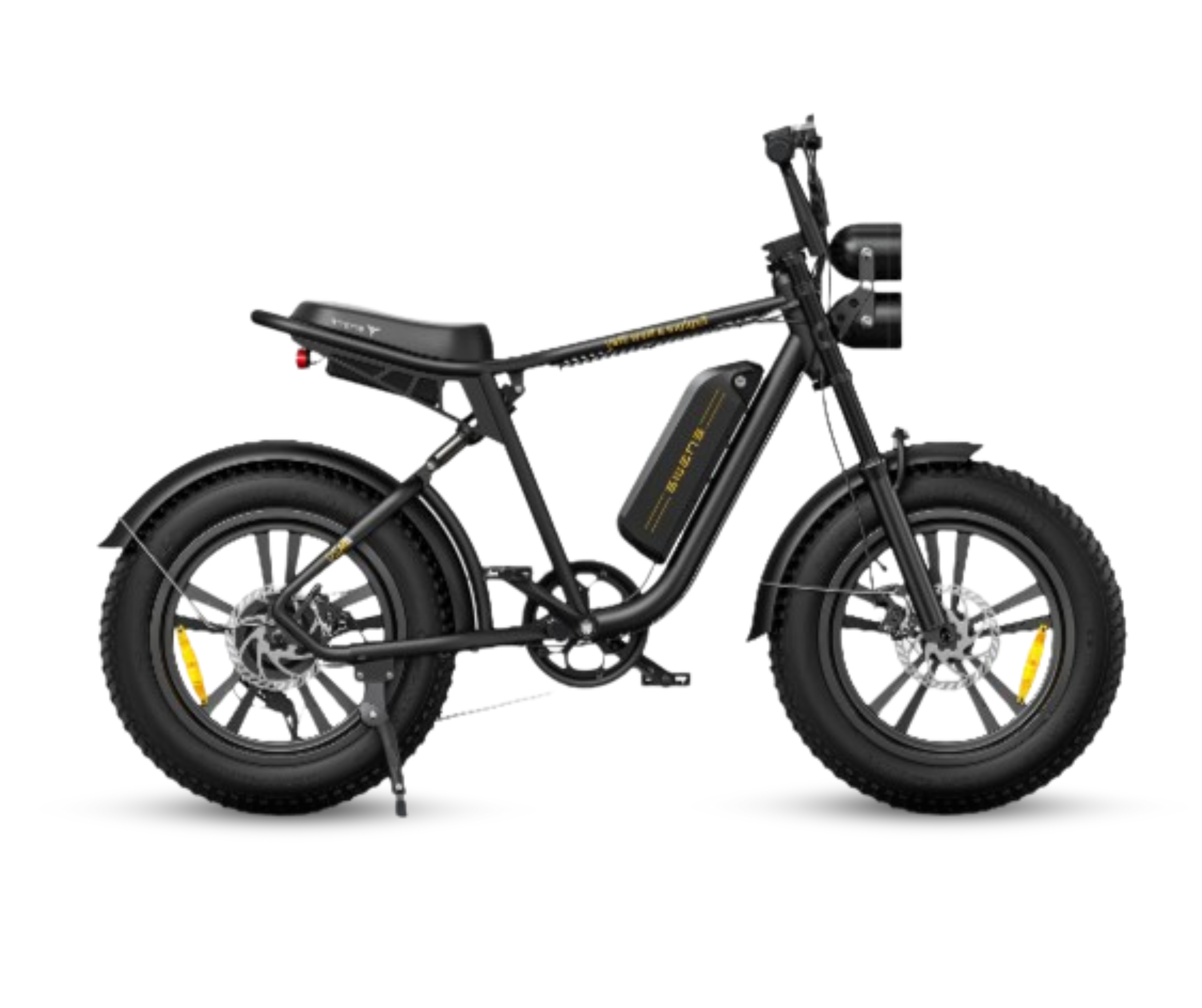

The e-bike battery is the single most important component on your bike. It's also the one most riders worry about, understand least, and treat worst.
Done well, a modern lithium-ion e-bike battery will last you 5 years, often 7, sometimes more. Done badly, it'll be visibly weaker in 18 months and dead in 3 years.
The difference is almost entirely about how you charge it and how you ride it. Neither is complicated — but both require knowing a few honest, non-obvious rules that most retailers won't tell you (because they'd rather sell you a replacement battery).
This guide covers both halves of the equation:
- Battery care: how to maximise the lifespan of your e-bike battery so it lasts 5+ years
- Battery efficiency: how to get the most miles out of every single charge, so the bike doesn't die mid-ride
By the time you finish reading, you'll know more about e-bike batteries than 95% of UK riders — and your future self will thank you for it.
Subscribe to the Uni-trax newsletter for 10% off your entire order — including replacement batteries, when the time eventually comes.
Table of Contents
- How an E-Bike Battery Actually Works (in 60 Seconds)
- The Big Number: How Long Should Your Battery Last?
- Part 1: The 10 Rules for Battery Care That Add Years to Its Life
- Part 2: How to Get the Most Range Out of Every Charge
- Real-World Range vs Advertised Range (the Honest Maths)
- Pre-Ride and On-the-Road Range Strategies
- Storing the Battery Long-Term (Winter, Holidays, Spare Battery)
- When Your Battery Eventually Needs Replacing
- Frequently Asked Questions
How an E-Bike Battery Actually Works (in 60 Seconds)
Almost every modern e-bike uses a lithium-ion (Li-ion) battery — the same chemistry as your phone and laptop, just larger.
Inside the battery pack are many smaller cells (often 18650 or 21700 cylindrical cells, dozens of them wired together). A built-in Battery Management System (BMS) controls charging, prevents overheating, balances the cells, and protects against damage.
Two numbers matter most:
- Volts (V) — the "pressure" of the electricity. UK e-bikes are typically 36V or 48V.
- Amp-hours (Ah) — the "capacity" of the tank. Bigger Ah = more range.
Multiply them and you get Watt-hours (Wh) — the most useful single figure. For example: 36V × 10Ah = 360 Wh. That's the size of your fuel tank.
For UK context, the bikes at Uni-trax range from around 200 Wh (lightweight folders like the Fiido Air) to 700+ Wh (dual-battery setups like the ADO Air 28 Pro). Bigger isn't automatically better — it just means more weight, more cost, and more range. The right size depends on your routes.
The Big Number: How Long Should Your Battery Last?
This is the question every buyer wants the honest answer to.
A quality lithium-ion e-bike battery is typically rated for 700–1,000 full charge cycles before its capacity drops to around 70–80% of its original level. After that, it still works — it just doesn't go as far.
A full charge cycle doesn't mean "every time you plug it in." It means the equivalent of using 100% of the battery's capacity. So charging from 80% back to 100% is only 20% of a cycle, not a whole one.
In practical terms, that means:
- A daily commuter who part-charges 4–5 times a week typically gets 5–7 years out of a battery
- A casual leisure rider doing one or two rides a week can stretch that to 8–10 years
- A neglected or abused battery can degrade significantly inside 2–3 years
The variation is enormous — and it's almost all controllable.
Let's get to the rules.
Part 1: The 10 Rules for Battery Care That Add Years to Its Life
Rule 1: Don't store at 100% (or 0%)
This is the single most important rule, and the one most riders get wrong.
Lithium-ion batteries hate sitting at extremes. Stored at 100%, a battery degrades roughly 2–3x faster than one stored at 50%. Stored fully discharged (0%), it can suffer permanent damage in a few weeks.
The ideal long-term storage state is 40–60% charge. Think of it as "comfortable, neither hungry nor stuffed."
What this means in practice: charge to 100% only when you're about to go on a long ride. For daily use, the next rule covers it.
Rule 2: For daily use, charge between roughly 20% and 80%
The sweet spot for daily lithium-ion use is 20–80%. Letting the battery dip below 20% or charging it all the way to 100% routinely both add wear.
In real-world terms, this means plugging in when you have 25–30% left, and unplugging at 80% or so rather than always topping up to 100%. For most commutes, this is more than enough range — and it can easily double your battery's lifespan.
Save the 100% charges for the days when you actually need the full range.
Rule 3: Avoid charging in extreme temperatures
Lithium-ion batteries are temperature-sensitive in both directions. The ideal charging temperature is roughly 10–25°C — comfortable room temperature.
- Don't charge a battery that's freezing cold. If you've just brought a bike in from a winter ride, let the battery warm up to room temperature for an hour before charging.
- Don't charge in direct sun or a hot car. Heat accelerates degradation.
- Don't leave the battery on charge in a hot garage or shed in summer.
Charge indoors, in a normal room. Simple.
Rule 4: Use the original charger
It's tempting to buy a cheaper third-party charger, or to use a different USB charger for "just this once." Don't.
Your bike's charger is matched to your battery's specific voltage, current, and BMS communication. Using the wrong charger can over-charge, under-charge, or in extreme cases damage the battery or cause overheating.
Use the original charger that came with your bike, and if you need a spare, buy the manufacturer's official one. The £30 you save on a cheap charger can cost you a £300 battery.
Rule 5: Don't leave the battery plugged in for days
Modern chargers will stop charging when the battery hits 100% — but leaving the battery plugged in for days at a time still stresses the cells.
Unplug within a few hours of reaching full charge. Don't leave it plugged in overnight as a default habit — most chargers reach full inside 4–6 hours, so "overnight" usually means hours of unnecessary trickle-charge.
Rule 6: Charge after the ride, not before
If you ride hard and come home with a warm battery, let it cool down before plugging it in. Charging a hot battery accelerates cell degradation. Give it 30 minutes to come back to room temperature, then charge.
A simple habit: ride home, take the battery off, sit it on a shelf indoors, plug it in 30 minutes later. Done.
Rule 7: Don't fully discharge — ever
Running the battery to 0% (or, worse, leaving it there) puts the BMS into a deep-sleep "protection" state that can be hard to recover from. In extreme cases, a battery left at 0% for weeks may never fully recover its capacity.
Try to plug in when you've got 20%+ left. If you accidentally run flat, charge as soon as possible — don't leave it sitting empty.
Rule 8: Store indoors, away from extremes
UK garages and sheds get hot in summer and freezing in winter. Both kill batteries.
The ideal battery home is inside the house — a hallway cupboard, a spare room, anywhere with stable room temperature. If you store the bike outside, remove the battery and bring it inside. Most modern e-bikes (including ADO, Fiido, and Engwe ranges) have removable batteries specifically for this reason.
This also doubles as security — a thief who finds your bike but no battery has a paperweight.
Rule 9: Cycle the battery occasionally if it sits idle
If you don't use your bike for several weeks (over winter, on holiday, between seasons), don't just leave it sitting.
Every 4–6 weeks, give the battery a partial charge to keep it in the healthy 40–60% range. A battery left untouched at low charge for months can lose capacity permanently.
Rule 10: Keep it clean and dry
Wipe the battery contacts and connectors occasionally with a dry cloth. Avoid jet-washing the bike around the battery housing. Modern e-bike batteries are sealed and water-resistant — but they're not waterproof, and corrosion at the contacts is a slow killer.
Part 2: How to Get the Most Range Out of Every Charge
Looking after the battery's long-term life is one thing. Making sure you don't run out today is another. Here's the practical side.
Real-World Range vs Advertised Range (the Honest Maths)
Let's start with the truth most retailers won't tell you:
The range printed on the box is almost always optimistic.
Manufacturer figures are measured in lab conditions: a light rider, flat road, no wind, lowest assist level, perfect temperature, fresh battery. Conditions that barely exist in real-world Britain.
Realistic rule: expect around 60–70% of the advertised range in normal UK conditions.
So:
- A bike advertised at 100 km range will more realistically deliver around 60–70 km for an average rider in normal conditions
- A bike advertised at 140 km (like the Engwe L20) will more realistically deliver around 85–100 km
- A bike advertised at 160 km dual-battery (like the ADO Air 28 Pro) will more realistically deliver around 100–115 km
This isn't a scandal — it's just physics. The trick is knowing it, and planning your rides accordingly.
For a deeper look at this and the UK law side, see our full guide: UK E-Bike Law & Range Explained.
Pre-Ride and On-the-Road Range Strategies
Before you set off
1. Charge to 100% if it's a long ride. Routine 80% charging is great for daily use, but if you're planning a 40-mile day out, top up the night before.
2. Check your tyre pressure. Under-inflated tyres can quietly eat 10–20% of your range. The right pressure (printed on the tyre sidewall) is a free range boost. Get a track pump and use it weekly.
3. Plan for the wind. If there's a strong wind forecast, plan to ride into the wind on the way out, when you and the battery are fresh, and ride back with it at your back.
4. Plan for the hills. Hills drain the battery far faster than flat ground. Build hill sections into the first half of your ride if possible, so you have headroom on the way home.
5. Know where you can top up. For longer rides, identify cafés or pubs along the route where you can ask to plug in for an hour. Many UK cycling-friendly venues will say yes. A 1-hour charge can add meaningful range.
While you're riding
6. Drop an assist level. This is the single biggest range lever you control. Riding in Eco/low assist instead of Max can add 20–30% range or more.
Most riders default to high assist out of habit. Try riding the next 10 minutes one assist level lower than you usually do — you'll quickly discover you don't actually need the extra help on flat ground.
7. Use Eco on the flat, Sport on hills. Save the high assist for where it actually matters — climbs and headwinds. Cruise the rest in Eco. This single habit can extend your range dramatically.
8. Pedal smoothly. Hard acceleration from a standstill is a battery killer. Anticipate traffic lights, ease into the pedals, build speed gradually. Riding smoothly rather than stop-start can add real range.
9. Use your gears properly. Even on a single-speed or auto-shift bike, keeping your cadence (pedal RPM) in a comfortable, brisk range — roughly 70–90 RPM — helps the motor work more efficiently. Slow, grinding pedalling at low cadence makes the motor work harder.
10. Mind the cold. Lithium-ion batteries lose efficiency in cold weather — sometimes 10–25% less range below freezing. If you're riding in winter, keep the battery indoors when not riding and warm it to room temperature before fitting. Don't leave it on the bike overnight in the shed.
11. Lighter loads mean longer range. Cargo, panniers, child seats, and heavy backpacks all reduce range. Even a 10kg load can shave 10–15% off. Not always avoidable, but worth knowing.
When you're worried about making it home
12. Drop to lowest assist immediately. As soon as you sense you might not have enough range, drop to Eco (or off entirely on the flat) and ride conservatively.
13. Pedal harder yourself. An e-bike is still a bike. You can ride it home unassisted if you have to. Slower, sweatier, but it works.
14. Find a power point. Even 30 minutes plugged in at a café or train station can add a few miles — sometimes enough to get you home. Don't be shy about asking.
15. The "halfway rule." On any long ride, aim to be at 50% battery or higher at the halfway point. Headwinds, hills, and surprises always seem to land on the return leg.
Storing the Battery Long-Term (Winter, Holidays, Spare Battery)
If you're not going to ride for weeks or months, follow these rules:
- Discharge or charge to 40–60% before storage. Not full, not empty.
- Store indoors at room temperature — never in a cold garage or hot shed.
- Remove from the bike if you're storing the bike outside.
- Top up every 4–6 weeks back to the 40–60% range.
- Don't store fully charged for more than a week. Lithium-ion at 100% degrades roughly 2–3x faster than at 50%.
For UK riders, this is especially important over winter (December–February). The bikes that come back to life in spring with the longest range are the ones whose batteries were stored properly.
When Your Battery Eventually Needs Replacing
Even with perfect care, a lithium-ion battery has a finite lifespan. Eventually — usually after 5–8 years of regular use, longer if you've been gentle — you'll notice a meaningful drop in range, and replacing the battery is the cheapest way to bring the bike back to life.
Signs your battery may be nearing the end:
- Range has dropped to roughly 60% of original or less
- Battery feels noticeably warmer than usual while charging
- Battery takes longer to fully charge than it used to
- Sudden, unexpected drops in displayed charge percentage
If any of these sound familiar, the good news is that replacement batteries are widely available for ADO, Fiido, and Engwe bikes at Uni-trax — and the cost is typically a fraction of buying a new bike.
For ADO Air series owners, we stock the ADO Seat Battery in black or silver (£299) — a direct, genuine OEM replacement that slots into the seatpost and brings the bike back to full capability.
▶ Browse all ADO accessories and replacement parts: https://uni-trax.com/collections/ado-accessories
▶ Subscribe to the Uni-trax newsletter for 10% off your entire order
Frequently Asked Questions
How long should my e-bike battery actually last?
For a typical UK rider following the rules in this guide, 5–7 years of daily use is realistic. Casual leisure riders can stretch that to 8–10. A neglected battery can fail in under 3.
Is it bad to leave my e-bike on charge overnight?
It's not catastrophic — modern chargers stop charging at 100% — but it's not ideal as a habit. The battery sits at 100% (a high-stress state) for hours longer than necessary. Unplug within a few hours of reaching full charge.
Should I always charge to 100%?
No. For daily use, charging to 80% and keeping the battery in the 20–80% range will significantly extend its life. Save 100% charges for days when you genuinely need the full range.
My bike says 100km range. Why am I only getting 65km?
That's actually completely normal. Manufacturer range figures are lab-tested under ideal conditions. Real-world range is typically 60–70% of advertised. Rider weight, terrain, wind, temperature, assist level, and tyre pressure all reduce it. Your bike is fine — the marketing was just optimistic.
What kills an e-bike battery fastest?
In order: storing at 0% for weeks, charging in extreme heat, using a non-original charger, always charging to 100% and leaving it there, and fully discharging the battery regularly. Most premature battery deaths come from one of these.
Can I leave my battery on the bike in a shed over winter?
Strongly recommended against. Cold UK winters drain batteries and accelerate degradation. Remove the battery and store it indoors at 40–60% charge, topping up every 4–6 weeks. Your spring self will thank you.
Are e-bike batteries safe?
Yes — modern lithium-ion batteries with a proper BMS (which all bikes at Uni-trax have) are very safe when used correctly. The main risks come from damaged batteries, non-original chargers, or extreme physical abuse. Don't try to disassemble the battery, and don't use one that's been visibly damaged in a crash.
How do I know when it's time to replace the battery?
When your real-world range drops to roughly 60% of what it was when new. At that point a replacement is the cheapest way to restore full performance — usually a fraction of buying a new bike.
Where can I recycle an old e-bike battery?
Never put a lithium-ion battery in normal household waste — they can cause fires. In the UK, take old batteries to a household waste recycling centre (HWRC) that accepts lithium-ion, or to a participating retailer. Many bike shops, including Uni-trax, can advise on proper disposal.
Does cold weather really reduce range?
Yes — significantly. Below freezing, you can lose 10–25% of normal range, sometimes more. In winter, plan shorter trips, keep the battery indoors when not riding, and warm it to room temperature before fitting.
Final Thoughts: Treat It Well, and It'll Carry You for Years
An e-bike battery isn't fragile — but it does reward a little knowledge.
Follow the 10 care rules and you'll comfortably get 5+ years out of your battery, often more. Follow the range strategies and you'll never again find yourself stranded with a flat battery 8 miles from home.
The whole thing is honestly simpler than it sounds. The summary, in case you only remember three things:
- Live in 20–80% for daily use. Top to 100% only when you need to.
- Avoid temperature extremes — both for charging and for storage.
- Drop an assist level if you're worried about range. It's the single biggest range lever you control.
That's it. Do those three things and you'll outlast 90% of e-bike owners' batteries.
▶ Browse ADO replacement batteries and accessories at Uni-trax: https://uni-trax.com/collections/ado-accessories
▶ Subscribe to the Uni-trax newsletter for 10% off your entire order
A full charge costs around 12–13p — so how much does an e-bike save you overall? We've crunched the numbers in E-Bike vs Car: How Much You Really Save Commuting by E-Bike in the UK. Spoiler: it's around 30 times cheaper per mile than a petrol car.
Article keywords
e-bike battery life UK how long does an e-bike battery last e-bike battery care make e-bike battery last longer e-bike range tips UK lithium ion bike battery storage e-bike battery winter UK e-bike charging best practice ADO replacement battery extend e-bike range e-bike range advertised vs real Uni-trax battery guide