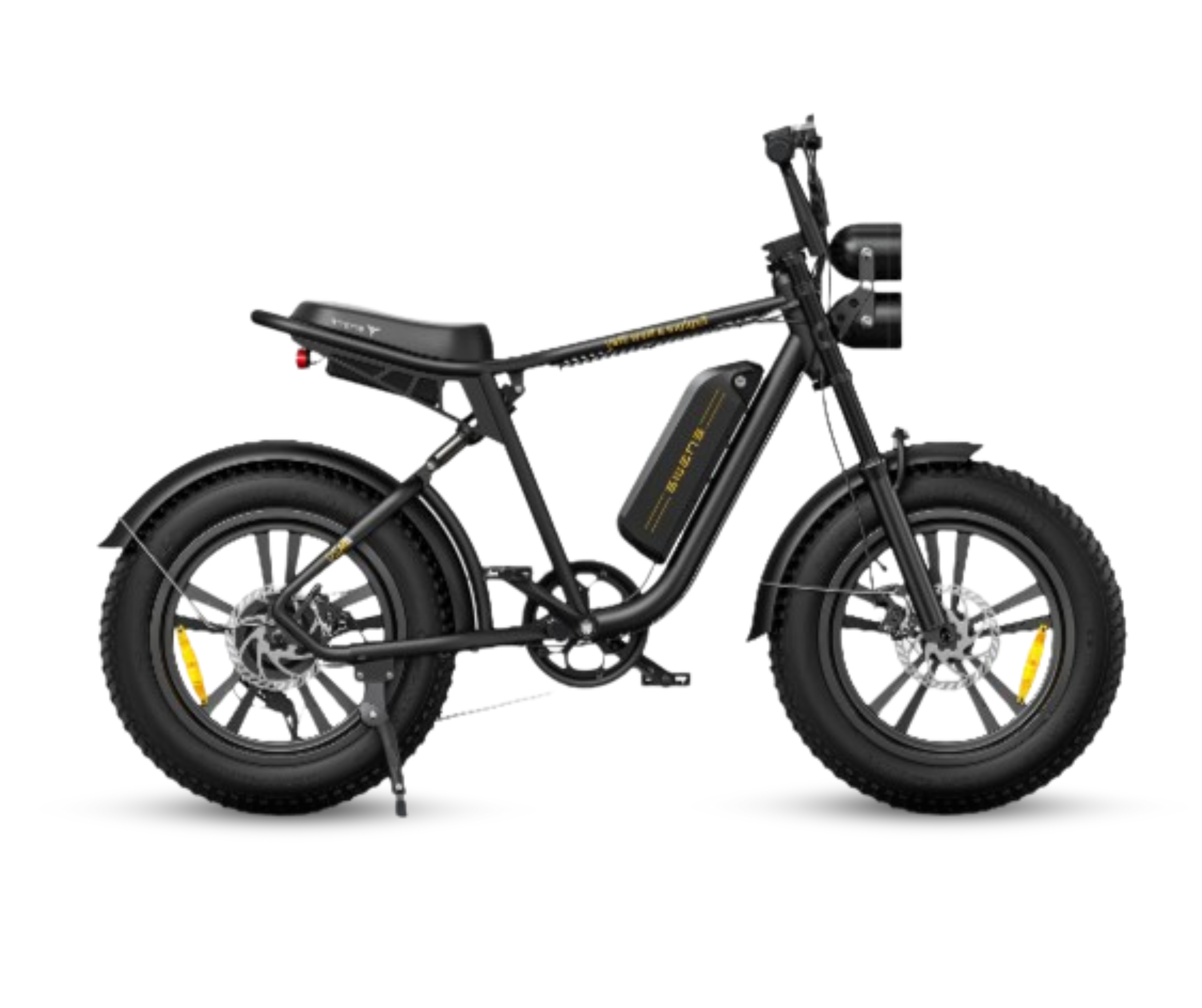

If you're thinking about buying an electric bike, two questions come up before almost any other:
- "Is it legal — and do I need a licence?"
- "How far will it actually go on one charge?"
They're the right questions to ask, and the honest answers are genuinely reassuring. In this guide, we'll explain UK e-bike law in plain English — what's legal, how fast you can go, whether you need a licence — and then give you a realistic, no-nonsense guide to e-bike range that cuts through the optimistic marketing numbers.
No jargon, no spin. Just what you actually need to know before you buy. And when you're ready, subscribe to the Uni-trax newsletter for 10% off your entire order.
Table of Contents
- Part 1: UK E-Bike Law Explained
- What Is an EAPC?
- How Fast Can a UK E-Bike Go?
- Do You Need a Licence, Tax, or Insurance?
- Age, Helmets, and Where You Can Ride
- The Throttle Question
- Part 2: How Far Can an E-Bike Really Go?
- What Actually Affects Your Range
- Realistic Range by Battery Size
- How to Get More Miles From Every Charge
- Uni-trax Bikes: Legal, and Built to Go the Distance
- Frequently Asked Questions
Part 1: UK E-Bike Law Explained
Let's start with the good news: for the vast majority of e-bikes sold in the UK, the law is simple and rider-friendly. A compliant e-bike is treated almost exactly like a normal pedal bicycle — no licence, no tax, no insurance, no registration.
The key is making sure your bike qualifies as an EAPC.
What Is an EAPC?
EAPC stands for Electrically Assisted Pedal Cycle. It's the legal category that covers ordinary, road-legal electric bikes in Great Britain. If your e-bike meets the EAPC rules, the law treats it like a bicycle.
To qualify as an EAPC in 2026, the bike must:
- Have working pedals that can propel the bike
- Have a motor rated at 250W continuous power or less
- Stop providing motor assistance at 15.5 mph (25 km/h)
- Display key information — the motor's power output or manufacturer, and the battery voltage or maximum speed (usually on a plate or durable marking on the frame)
That's it. If a bike ticks those boxes, it's legally a bicycle.
Every e-bike sold at Uni-trax is fully EAPC-compliant, so you can buy with complete confidence that what you're riding is road-legal.
How Fast Can a UK E-Bike Go?
This is the single most-searched e-bike question in the UK, and the answer has two parts:
The motor assists you up to 15.5 mph (25 km/h). Once you hit that speed, the motor stops helping. This is a legal requirement for every EAPC.
But you can still pedal faster than 15.5 mph — there's no law against going quicker under your own steam, just as you would on a normal bike going downhill. The motor simply won't add power above the limit.
So the honest summary: an e-bike helps you cruise effortlessly up to 15.5 mph, which for most riders means a comfortable, steady pace that makes commuting and leisure riding genuinely easy — without ever feeling like a motorbike.
⚠️ A word of warning on "derestricting": Some sellers advertise bikes (or kits) that assist beyond 15.5 mph or have motors over 250W. If you de-restrict an e-bike or buy one that exceeds EAPC limits, it's no longer legally a bicycle — it becomes a moped or motorcycle in the eyes of the law, requiring registration, insurance, tax, a licence, and a motorcycle-standard helmet. For almost everyone, that defeats the entire point. Stick to EAPC-compliant bikes (like everything at Uni-trax) and you stay completely road-legal.
Do You Need a Licence, Tax, or Insurance?
For a compliant EAPC, the answer is refreshingly simple:
- Licence? ❌ No
- Road tax? ❌ No
- Insurance? ❌ Not legally required (though many riders choose theft/damage cover — sensible, but optional)
- Registration? ❌ No
You can buy an EAPC and ride it the same day, exactly as you would a normal bicycle. This is one of the great joys of e-biking in the UK — all the benefit, none of the bureaucracy.
The only time any of that changes is if the bike isn't an EAPC (i.e. over 250W or assisting beyond 15.5 mph), in which case the moped/motorcycle rules kick in.
Age, Helmets, and Where You Can Ride
Minimum age: You must be at least 14 years old to ride an EAPC on public roads and cycle paths in Great Britain. This is a firm legal requirement.
Helmets: There is no legal requirement to wear a helmet on an EAPC (just as there isn't on a normal bike). That said, we'd always strongly recommend one — along with good lights and a quality lock.
Where you can ride: Because an EAPC is legally a bicycle, you can ride it anywhere a normal pedal bike is allowed — roads, cycle lanes, cycle paths, and bridleways. You cannot ride on pavements (same as any bike).
The Throttle Question
This trips a lot of buyers up, so it's worth being clear.
- A "walk-assist" throttle that helps the bike along at up to walking pace (around 4 mph / 6 km/h) without pedalling is legal on an EAPC.
- A full "twist-and-go" throttle that powers the bike up to 15.5 mph without pedalling generally requires type approval to be road-legal, and most modern EAPCs sold in the UK are pedal-assist (the motor helps only while you pedal) precisely to stay cleanly within the rules.
The bikes at Uni-trax use pedal-assist with torque sensors, which deliver smooth, natural, road-legal power — and, as a bonus, are more efficient with your battery (more on that below).
Part 2: How Far Can an E-Bike Really Go?
Now to the other big question — and here, we're going to be more honest than most.
The range number on the box is almost always optimistic. Manufacturer figures are typically measured under ideal lab conditions: a light rider, flat road, no wind, lowest assist level, mild temperature. In other words, conditions that barely exist in real-world Britain.
A realistic rule of thumb: expect around 60–70% of the advertised range in normal UK riding. So a bike advertised at 100 km (62 miles) will more realistically deliver somewhere around 60–70 km (40–45 miles) for an average rider in typical conditions — and that's perfectly fine once you know to expect it.
This isn't a scandal — it's just physics. The key is understanding what affects your range so you can choose the right bike and set realistic expectations.
What Actually Affects Your Range
Seven factors make the biggest difference:
- Battery capacity (Wh) — the single biggest factor. Watt-hours (Wh) = the size of your "fuel tank." Bigger Wh = more range. You can calculate it as Voltage × Amp-hours (e.g. 36V × 10Ah = 360Wh).
- Assist level — the biggest factor you control. Riding in Eco/low assist instead of max can extend range by 20–30% or more.
- Rider and cargo weight — more weight means the motor works harder. Heavier riders or loaded racks see meaningfully lower range.
- Terrain — hills drain the battery far faster than flat ground. A hilly UK commute will return noticeably less than a flat one.
- Wind and weather — headwinds force the motor to work harder, and cold weather reduces battery efficiency (expect less range in winter).
- Tyres and pressure — under-inflated or wide fat tyres create more rolling resistance. Keeping tyres properly inflated is free range.
- Riding style — smooth, steady pedalling is far more efficient than constant hard acceleration from a standstill.
Realistic Range by Battery Size
A useful rough guide is roughly 1–2 miles per 10Wh of battery in real-world UK conditions (the lower end on hills/high assist, the higher end on the flat in Eco). Here's a realistic picture:
| Battery size | Advertised range (typical) | Realistic UK range | Best for |
|---|---|---|---|
| ~200–260 Wh | 40–50 km | ~25–35 km (15–22 mi) | Short commutes, town trips |
| ~350–400 Wh | 70–80 km | ~45–55 km (28–34 mi) | Daily commuting, errands |
| ~500 Wh | ~100 km | ~50–65 km (30–40 mi) | Longer commutes, day rides |
| ~700 Wh+ / dual battery | 120–160 km | ~80–110 km (50–68 mi) | Long rides, touring, hilly areas |
The practical takeaway: for most commuters doing a 10–20 mile round trip, a 350–500 Wh battery is plenty — often a full week of commuting between charges. If you do long weekend rides, live somewhere hilly, or are a heavier rider, look at larger or dual-battery options for peace of mind.
How to Get More Miles From Every Charge
Want to stretch your range? These genuinely work:
- Drop an assist level. The easiest win — lowering assist by one level can add 20–30% range.
- Keep tyres properly inflated. Check weekly; low pressure quietly eats range.
- Pedal smoothly. Anticipate stops, avoid hard acceleration from standstill.
- Use your gears. Help the motor work in its efficient range, especially on hills.
- Mind the cold. In winter, store the battery indoors and bring it to room temperature before charging.
- Look after the battery long-term. For daily use, charging between roughly 20% and 80% reduces wear; only charge to 100% before a long ride. This protects capacity over the years.
And a lovely bonus fact: charging is astonishingly cheap. A 500Wh battery costs roughly 12–13p for a full charge at UK electricity rates — under a pound a week even if you charge daily. Compare that to petrol, parking, or a bus pass.
Uni-trax Bikes: Legal, and Built to Go the Distance
Every e-bike we sell at Uni-trax is fully EAPC-compliant — 250W, pedal-assist, 15.5 mph cut-off — so it's road-legal with no licence, tax, or insurance needed. And across our ADO, Fiido, and Engwe ranges, there's a battery size and range to suit every kind of rider:
- Short commutes & light, portable riding → the lightweight Fiido Air (carbon) or Fiido C21 (~80 km claimed)
- Everyday commuting → the ADO Air 20 folding range and ADO Air Carbon (up to ~100 km claimed)
- Longer city rides & full-size comfort → the ADO Air 28 (up to ~100 km claimed)
- Maximum range & adventure → the ADO Air 28 Pro (up to 160 km with dual battery) or Engwe L20 (up to 140 km claimed)
Remember to apply the realistic 60–70% rule to all those figures — and if range is a priority, our team can help you pick the right battery size for your actual routes.
▶ Explore ADO: https://uni-trax.com/collections/ado ▶ Explore Fiido: https://uni-trax.com/collections/fido ▶ Explore Engwe: https://uni-trax.com/collections/engwe ▶ Subscribe to the newsletter for 10% off your entire order
Frequently Asked Questions
Do I need a licence to ride an e-bike in the UK?
No. As long as your e-bike is a compliant EAPC (250W or less, pedal-assist, assistance cutting off at 15.5 mph), you need no licence, no tax, no insurance, and no registration. It's treated like a normal bicycle. Every bike at Uni-trax meets these rules.
How fast can an e-bike legally go in the UK?
The motor assists you up to 15.5 mph (25 km/h), then stops helping. You can still pedal faster than that under your own power — the motor just won't add to it.
How old do you have to be to ride an e-bike?
You must be at least 14 years old to ride an EAPC on public roads and cycle paths in Great Britain.
Do I have to wear a helmet?
There's no legal requirement to wear a helmet on an EAPC, but we strongly recommend one, along with good lights and a quality lock.
Can I ride an e-bike in the rain?
Yes. E-bikes are designed to handle normal UK weather — just don't submerge the battery or jet-wash the electrics. Most bikes (including those at Uni-trax) carry an IP weather-resistance rating for exactly this.
Why is my real-world range lower than the advertised figure?
Because manufacturer figures are measured in ideal lab conditions. In real UK riding — with hills, wind, cold, and a real rider's weight — expect around 60–70% of the advertised range. That's normal and applies across the whole industry.
What battery size do I need?
For a typical 10–20 mile round-trip commute, a 350–500 Wh battery is plenty. For long rides, hills, or heavier riders, consider larger or dual-battery options. Our team can help match a bike to your actual routes.
How much does it cost to charge an e-bike?
Very little — roughly 12–13p for a full charge of a 500Wh battery at UK electricity rates. Even daily charging costs under a pound a week.
Are throttle e-bikes legal in the UK?
A walk-assist throttle (up to ~4 mph) is legal on an EAPC. A full twist-and-go throttle that powers you up to 15.5 mph without pedalling generally needs type approval. Uni-trax bikes use pedal-assist, keeping them cleanly road-legal.
Final Thoughts: Legal, Affordable, and More Capable Than You Think
UK e-bike law is genuinely on your side: buy a compliant EAPC — which is everything at Uni-trax — and you ride licence-free, tax-free, and insurance-free, exactly like a normal bike. And while you should treat advertised range figures with a healthy pinch of realism, the truth is that even a modest e-bike will comfortably cover most people's commutes and leisure rides for pennies per charge.
The best way to find the right bike for your routes and your riding? Come and try one. Book a free test ride at a Uni-trax store, and we'll help you choose a bike that's road-legal, the right range, and a genuine pleasure to ride.
▶ Find your e-bike at Uni-trax — and claim your 10% newsletter discount today.
Want to see what all this saves you? No tax, no insurance, and pennies to charge — we've done the full maths in E-Bike vs Car: How Much You Really Save Commuting by E-Bike in the UK. The numbers are eye-opening.
Article keywords
UK e-bike law 2026 do you need a licence for an e-bike UK how fast can an e-bike go UK EAPC rules UK are e-bikes legal UK e-bike age limit UK e-bike range explained how far can an e-bike go e-bike battery range UK electric bike law UK e-bike no licence realistic e-bike range