
Let's start with the obvious conflict of interest: we sell this bike. So you're entitled to be sceptical of a review published by the shop that wants your money.
Which is exactly why this one includes the problems. Not vague "it's not perfect" hand-waving — the specific, repeatable complaints that independent reviewers keep finding, and the one quirk that makes people think their bike has broken when it hasn't.
The P275 SE is our best-selling value bike and we recommend it constantly. It also has real limitations, and if you're in the group those limitations affect, you should buy something else. Here's the full picture.
The Quick Verdict
Price at Uni-trax: £849 (down from £1,499)
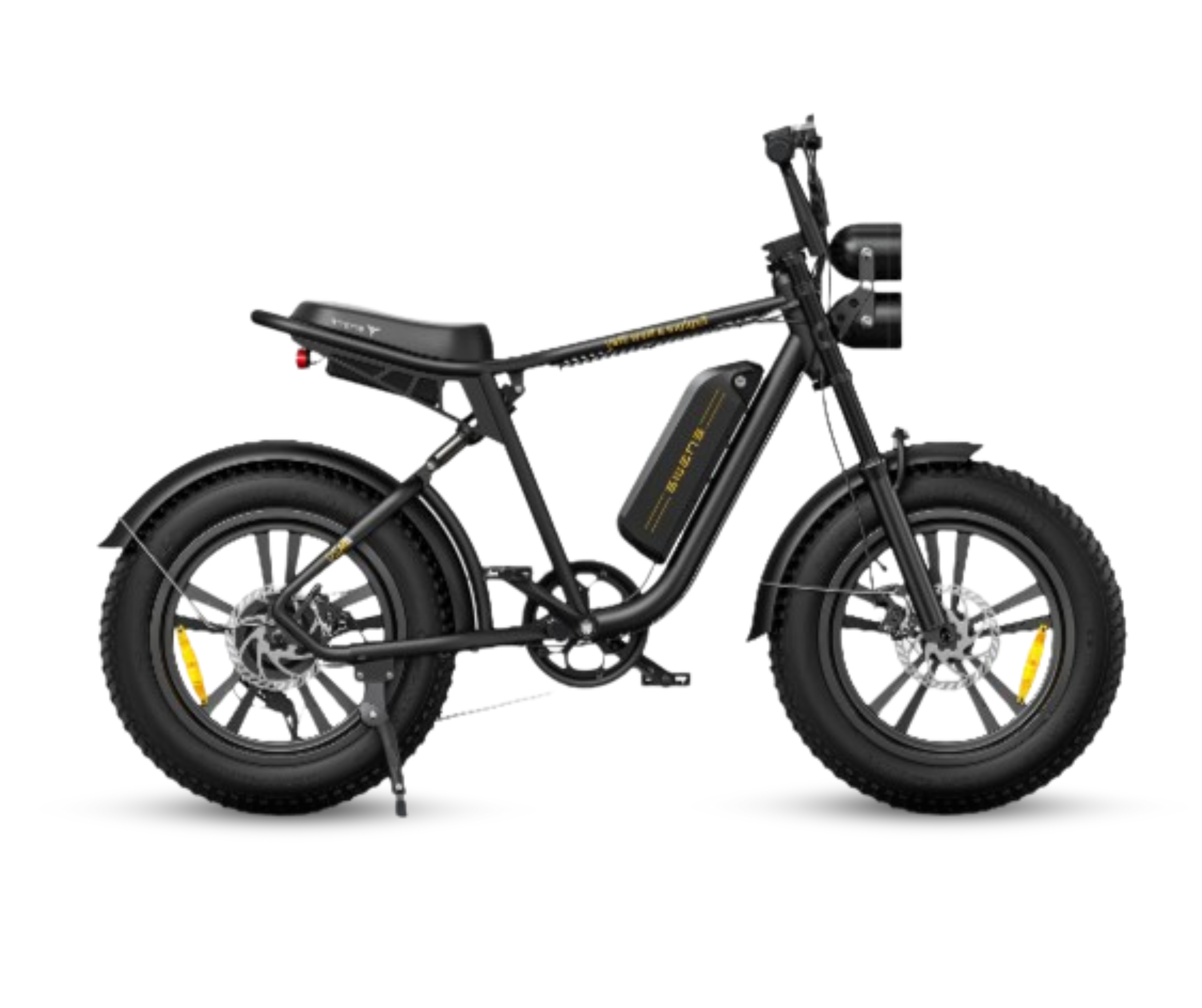
What it is: a 27.5-inch hybrid commuter with a 250W rear hub motor, torque sensor, hydraulic disc brakes, 468Wh removable battery, Shimano 7-speed, suspension fork, and integrated lights, mudguards and rack as standard.
The short version: on flat and rolling terrain, this is one of the best-value e-bikes you can buy in Britain, and independent reviewers broadly agree — road.cc gave it 8/10, ERideHero called it the best-value city e-bike they'd tested. If you live somewhere genuinely hilly, don't buy it.
The Good — And It's Genuinely Good
The torque sensor is the headline, and it deserves to be. This is the single biggest reason the bike feels better than its price. ENGWE's older systems were widely criticised as glorified cadence sensors; this one isn't. The motor responds the instant you start pedalling, power delivery is smooth and progressive, and it tapers off gently around 16.5 mph so you can hold a natural rhythm in traffic rather than being shoved and then abandoned.
At £849, having a proper torque sensor at all is unusual. Having a good one is remarkable.
It's quiet. Genuinely so. Worth more than people expect on a daily commute.
The ride is comfortable. The 27.5" × 1.95" CST tyres do a lot of work, and the suspension fork — basic though it is — takes the edge off. Reviewers consistently describe it as predictable and confidence-inspiring on mixed roads and cycle paths.
Real-world range is better than claimed. ERideHero recorded 71.2 km on the highest assist level (PAS 5) — beating ENGWE's own figure, which almost never happens. On lower assist you'll comfortably exceed that. For a 468Wh battery, that's efficient.
It arrives properly equipped. Lights, mudguards, rear rack, hydraulic brakes — all standard. Many bikes at this price make those extras.
It's still rideable when the battery dies. Not true of every e-bike, particularly ENGWE's heavier fat-tyre models. If you run flat five miles from home, you can pedal it.
The factory setup is decent. Internal cable routing, brakes that don't rub, nothing loose out of the box.
The Bad — The Part That Matters
1. It struggles on steep hills. This is the big one.
Every independent reviewer says this, in almost identical language. ERideHero tested it on a 17% gradient and found it slowed to about 10 km/h on maximum assist, with the rider doing noticeably more work. Above roughly 10% gradient, the top speed drops off progressively.
This isn't a fault — it's a 250W rear hub motor doing what 250W rear hub motors do. But it means:
- Moderate hills: fine. Rolling terrain, bridges, gentle climbs — no problem.
- Steep, sustained climbs: you will be working. And on anything approaching 20%, you'll be working hard.
If your commute involves genuine hills, you want a mid-drive motor, which multiplies torque through the gears. That's a different bike and a different budget. Be honest with yourself about your route before you buy.
2. Brake fade on long steep descents — though reviewers disagree
Several reviewers (road.cc, EV Powered, Delivery Hustle) report a tendency for the hydraulic brakes to fade under sustained heavy braking on long steep descents.
In fairness, ERideHero explicitly tested for this and found none, even on the steepest descents in their city. So it's not universal, and it may depend on rider weight, descent length and how you brake.
Our read: they're decent brakes that suit the bike's speed and weight, and they're fine for everyday use. But if you regularly descend long steep hills, know that some reviewers have found their limit.
3. The lights aren't good enough for unlit roads
Fine for lit urban streets. Not adequate for country lanes at night, where you need to actually see the road rather than just be seen. Two separate reviewers flagged this.
If any part of your commute is unlit, budget for a proper front light. It's not an expensive fix, but you shouldn't discover it on a dark lane.
4. The taillight doesn't respond to braking
No brake-light function. Minor, but worth knowing if you ride in traffic and assumed otherwise.
5. Entry-level drivetrain
It uses Shimano Tourney, Shimano's most basic 7-speed groupset. It works, it'll keep working, and at this price it's an entirely reasonable place to save money — but it's not refined, and the limited gear range compounds the hill problem above.
6. The display washes out in direct sunlight
Reported by at least one reviewer. Irritating on a bright morning.
7. The app is buggy
ERideHero found ENGWE's companion app unreliable. Delivery Hustle's take is that it isn't essential and most riders won't bother with it — which is probably the right attitude, but if app connectivity matters to you, temper expectations.
8. No real anti-theft, and it doesn't fold
No integrated GPS tracker or built-in security, so budget for a good lock. And it's a full-size non-folding frame — so it won't go on the Tube, and it needs proper storage space.
9. Assembly takes longer than advertised
ENGWE quotes 20 minutes; ERideHero took about 30. You'll need to fit the front wheel, handlebars, mudguard, rack and light. The rear rack mounting is the fiddly bit — it's a two-piece arrangement requiring you to unscrew and reinstall the fender struts, and it takes patience to align properly.
If you've built bikes before, it's straightforward. If you haven't, it may feel daunting — and we'd genuinely rather you let us set it up than have the brakes wrong.
10. The weight figures don't agree
ENGWE lists the bike at 24 kg. At least one reviewer has published it at 28 kg. That's a meaningful gap and we can't resolve it from here — so if weight is critical to you, come and lift one before buying.
The Quirk Nobody Warns You About
This one deserves its own section, because multiple reviewers initially thought their bike was broken.
When the battery drops to around two bars, the motor cuts out on the higher assistance levels and the display flashes "Error 4."
It isn't a fault. It's ENGWE's under-voltage protection — a deliberate safety feature that prevents the battery over-discharging, which is genuinely good for battery longevity. Drop to a lower assist level and you'll keep riding.
But it's alarming if you don't know, and it effectively means your usable range on high assist ends before the battery is actually empty. Factor that into your planning: when you see two bars, drop the assist.
Who Should Buy It
✅ Buy the P275 SE if:
- Your riding is flat to moderately rolling
- You commute on lit roads or cycle paths
- You want a proper torque sensor and hydraulic brakes on a tight budget
- You value comfort and a quiet, natural-feeling ride
- You want a bike that arrives with rack, mudguards and lights included
- You have somewhere to store a full-size bike
❌ Don't buy it if:
- You live somewhere genuinely hilly — this is the main one
- You regularly descend long, steep hills
- You ride unlit roads at night and won't upgrade the light
- You need to fold it, or take it on the Tube
- You want a refined drivetrain or reliable app connectivity
So What's the Verdict?
At £849, the P275 SE is exceptional value — and its flaws are exactly the ones you'd expect a bike to have at that price.
That's the honest framing. ENGWE hasn't performed magic; they've chosen well. The money went into the things you feel every ride — the torque sensor, the hydraulic brakes, the comfortable tyres, the standard rack and mudguards. It came out of the things you notice less often — the drivetrain, the lights, the app, and outright hill-climbing power.
For a flat-to-rolling commute, that's a very smart set of trade-offs, and it's why this bike sells so well and why independent reviewers rate it as highly as they do.
For a hilly commute, it's the wrong set of trade-offs, and no price makes that right. If that's you, talk to us about a mid-drive instead — we'd much rather sell you a bike you'll still like in six months.
▶ See the ENGWE P275 SE at Uni-trax — or come to any of our UK stores for a free test ride. On a bike with a known hill limitation, riding it on your own terrain beats any review, including this one.
▶ Subscribe to the newsletter for 10% off your entire order — students and NHS staff get 15% with proof. (One or the other, not both.)
Keywords: ENGWE P275 SE review ENGWE P275 SE problems is ENGWE P275 SE good ENGWE P275 SE hills best budget e-bike UK ENGWE P275 SE Error 4 torque sensor e-bike under £1000