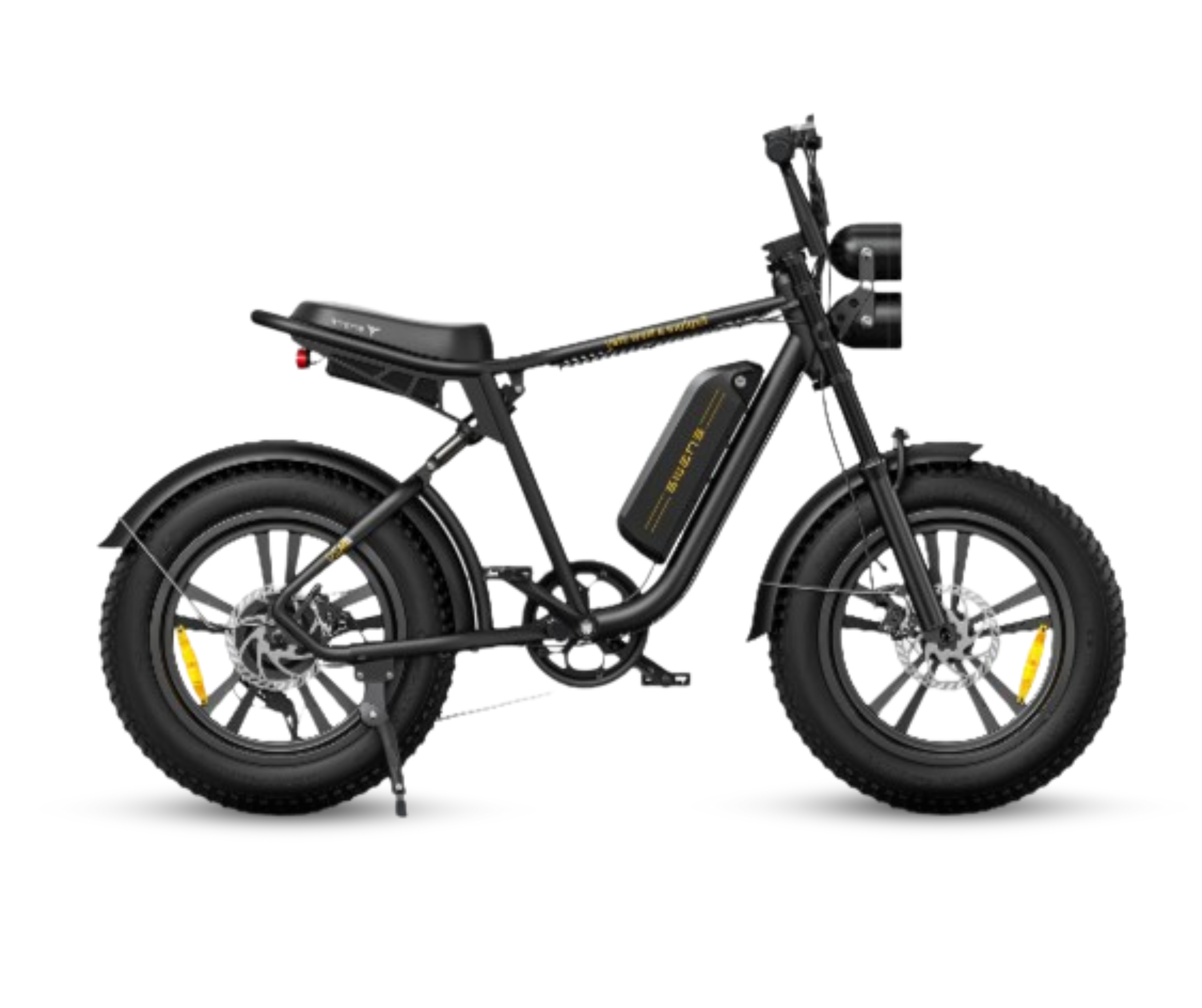

You don't notice your e-bike's weight when you're rolling along a Sunday cycle path. You notice it when you're hauling it up the stairs to a second-floor flat in Hackney, lifting it over the kerb at a Pret, or wedging it past the buggy in your hallway.
For a lot of British riders, that's the moment the romance ends. The bike rides beautifully — but it doesn't fit the life. Narrow halls, walk-up flats, train carriages with steps, salty winter roads, and the great British pothole all conspire against the heavy, bulky e-bikes that still dominate the market.
That's exactly why frame material matters more in the UK than almost anywhere else — and why Fiido's carbon fibre lineup, led by the Fiido Air, has become the standout choice for British commuters, weekend riders, and anyone who wants an e-bike that genuinely fits into daily life.
Below, we look at why the carbon-frame approach wins, how it compares with aluminium models in the Fiido range, and which rider profile each option suits best.
Why Light Carbon Wins on UK Roads
The case for a light carbon-frame e-bike isn't just "it's nicer to carry." For UK riders specifically, the advantages stack up across four areas:
1. British roads are rough — carbon absorbs it. Anyone who's commuted across London, Manchester, or Edinburgh knows our road surfaces aren't kind. Patched tarmac, sunken drain covers, cobbled side streets, root-cracked cycle paths. Carbon fibre dampens road vibration far better than aluminium, which means less hand fatigue, less back strain, and a noticeably smoother ride on long commutes.
2. British weather punishes metal frames. Wet winters, salted roads, coastal humidity. Carbon doesn't rust, doesn't corrode, and shrugs off the conditions that quietly age metal frames over years.
3. British homes are tight. Most UK riders aren't storing bikes in spacious American garages. They're carrying them up tenement stairs, threading them past hallway radiators, or stacking them in shared bike rooms. A 13–14 kg carbon e-bike makes that effortless. A 25 kg aluminium one does not.
4. UK law is clear on what's legal. Every Fiido sold for the UK market — carbon or aluminium — is built to EAPC standards: 250W continuous motor, pedal-assist only, 15.5 mph cutoff. No licence, no insurance, no tax. Carbon doesn't change that; it just changes how easy the legal bike is to live with.
Aluminium vs Carbon Fibre: How Fiido's Frames Compare
| Feature | Aluminium Frame (e.g. C11, C21) | Carbon Fibre Frame (Fiido Air) |
|---|---|---|
| Typical bike weight | 17.5–24 kg | 13.75 kg |
| Vibration absorption | Moderate; transmits more road feel | Excellent; naturally dampens rough surfaces |
| Corrosion resistance | Good with care | Outstanding; immune to rust |
| Price point | Entry to mid-range | Premium |
| Ride feel | Stable, confidence-inspiring at speed | Agile, nimble, "more like a regular bike" |
| Best for | Budget-conscious commuters, riders who want stability and value | Riders who lift, store, or carry their bike often; long-distance comfort seekers |
Both materials have their place. But for the realities of UK life — flats, stairs, weather, rough roads — carbon's advantages compound in ways that aluminium can't match.
Choosing the Right Fiido for Your Life
For City Commuters Who Lift Their Bike Daily
If you're carrying your bike up stairs to a flat, lifting it onto a train, or storing it in a tight hallway, the Fiido Air is the obvious pick. At 13.75 kg, it weighs roughly half what most e-bikes do — and the difference is genuinely transformative. Riders consistently say it's the first e-bike that doesn't feel like a chore to live with.
The carbon frame, Gates Carbon Drive belt (no oily chain on your work trousers), and integrated lights make it ideal for the year-round British commute.
For Riders Who Want Performance Without the Premium
If carbon's price tag isn't quite right for you yet, the Fiido C21 is the next best thing. At 17.5 kg with a step-over frame, torque sensor, and 100 km range, it delivers a sporty, responsive ride that handles UK city streets and weekend gravel paths equally well. Heavier than the Air, but lighter than most aluminium e-bikes on the market.
For Older Riders and Anyone Returning to Cycling
For riders who haven't cycled in years, or who simply want something stable and unintimidating, the Fiido C11 and C11 Pro offer step-through frames that make mounting and dismounting genuinely easy. They're heavier than the Air, but they're built for confidence rather than agility — and at this price point, they remain among the most accessible electric bikes in the UK.
For Women Riders Prioritising Handling
A lighter bike is almost always a more confidence-inspiring bike, especially in tight urban traffic or at low speeds. The Fiido Air leads the pack here, but the C21's manageable weight and balanced geometry also make it a strong choice for women who want both commute reliability and weekend versatility.
What Carbon Actually Means for Daily UK Riding
Beyond the spec sheet, here's what a light carbon frame changes about your week:
- You'll actually use the bike more. The mental friction of "ugh, I have to carry that thing down the stairs" disappears.
- You can mix it with public transport. Lifting a 14 kg bike onto a train or into a car boot is a different proposition from wrestling a 25 kg one.
- Hills feel kinder. Britain isn't flat. Whether it's the climb out of Bath, the inclines of Sheffield, or Highgate Hill in London, less weight matters even before the motor kicks in.
- Long rides leave you fresher. Carbon's vibration damping reduces the cumulative fatigue of pothole after pothole.
- Storage stops being a problem. The Air can be hung on a wall, slipped behind a sofa, or carried up a tenement close without drama.
A Quick Checklist Before You Choose
Ask yourself honestly:
- Will I be lifting or carrying the bike regularly? → Lean towards the Air.
- Do I have ground-floor storage and value low cost over low weight? → The C11 range is excellent.
- Do I want a sporty, responsive ride without going fully premium? → The C21 sits in the sweet spot.
- Am I commuting through wet British winters year-round? → Carbon's corrosion resistance pays off long-term.
- Do I care about resale value and long-term durability in UK conditions? → Carbon ages noticeably better than metal.
Final Thoughts
The best Fiido for you isn't the one with the biggest motor or the longest range on paper. It's the one you'll actually take out of the hallway every morning.
For most UK riders, light carbon fibre is the format that removes the most friction from daily cycling. The Fiido Air, with its 13.75 kg carbon frame, full EAPC compliance, and smart commuter spec, is the clearest expression of that philosophy in the Fiido range — and the e-bike that fits British life with the least compromise.
Aluminium models like the C11 and C21 still have their place, especially for budget-conscious or stability-focused riders. But if you're investing in a bike you want to ride for years across rough British roads, soggy British weather, and tight British homes, the carbon route is the one that pays you back every single day.
FAQ: Carbon-Frame E-Bikes in the UK
Q1: Is the Fiido Air road-legal in the UK? Yes. The Air is a fully EAPC-compliant electric bike — 250W motor, pedal-assist only, with assistance cutting off at 15.5 mph. No licence, insurance, or tax required.
Q2: Is carbon fibre durable enough for British roads? Absolutely. Carbon has an excellent strength-to-weight ratio and is widely used in high-end road and racing bikes that endure far harsher conditions. It handles potholes, kerbs, and daily commuting comfortably — the main thing to avoid is sharp impacts (e.g. dropping the bike on a hard edge).
Q3: How does carbon perform in wet UK weather? Better than aluminium or steel, in fact. Carbon doesn't rust or corrode, making it ideal for the salt, rain, and humidity of British winters. The Fiido Air is also IP54-rated, so light rain isn't a concern.
Q4: Is the carbon Fiido worth the premium over the aluminium models? For riders who lift, carry, or store their bike regularly — yes. The weight saving alone changes how often you actually use the bike. For riders with easy ground-floor storage and tighter budgets, the C11 or C21 deliver excellent value.
Q5: Which Fiido is best for a hilly UK city like Sheffield, Bristol, or Edinburgh? The Air is the easiest to ride uphill thanks to its low weight, but the C21's torque sensor also handles climbs well. Both stay within EAPC limits while delivering smooth, responsive assistance.