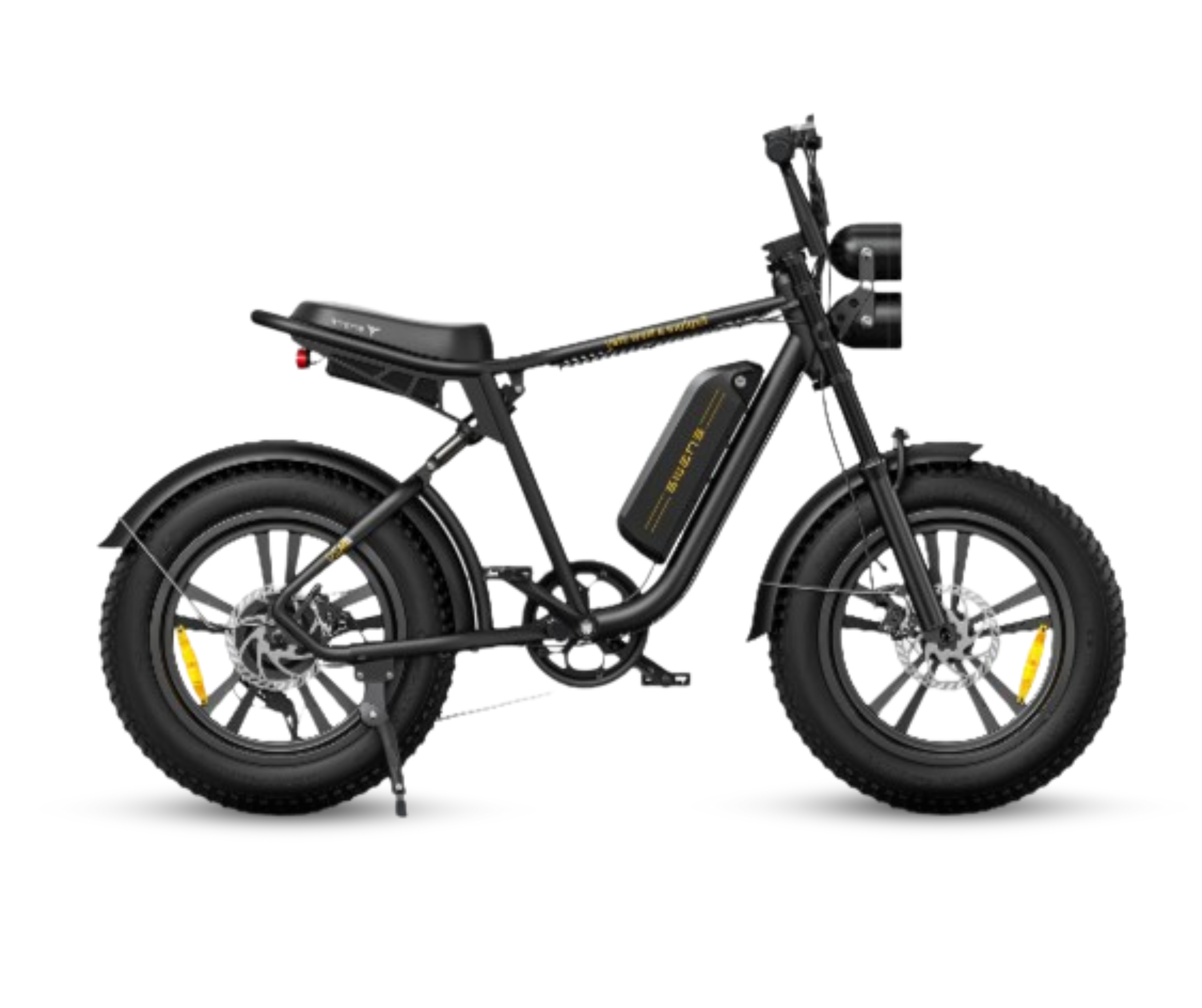

I finally did it. After months of recommending the ENGWE O20 Boost to customers — and quietly coveting it myself — I bought one. Soft Purple, because obviously.
It's still a fairly new bike, both to me and to the world: ENGWE only launched it this year. And now, having ridden it through a lovely summer, I'm about to do something I haven't done yet — take it through a British winter.
So I've been getting it ready properly. Partly because I want to keep riding through the cold months, and partly because I'd rather learn what works before the first frost than after it. Here's exactly what I'm doing, and why.
Table of Contents
- The Battery Gets a New Routine
- Lights: Already Good, Now Always On
- Brakes: My Winter Priority
- Tyres and Grip
- Mudguards — Non-Negotiable
- Keeping the Salt Off
- Where It Sleeps
- What I Wear
- My Winter Checklist
The Battery Gets a New Routine
This is where I'm making the biggest change, and it's the thing I'd tell any new e-bike owner to focus on first.
The O20 Boost has a 720Wh LG battery, which is genuinely large — it's why I've been getting such good range out of it all summer. But cold weather temporarily reduces what any lithium-ion battery delivers. I've been getting 90–110km in mixed riding through the warm months; I'm fully expecting less in deep winter, and I'd rather plan for that than be caught short on a dark evening.
Four habits I'm building:
- The battery comes indoors. It charges in my hallway at room temperature, not in a cold outbuilding. A cold battery charges badly and performs worse.
- No charging straight after a freezing ride. I let it warm to room temperature first — charging a very cold pack can damage it.
- Fit it just before leaving. Keeping it warm indoors and putting it on as I head out means starting with the battery at a sensible temperature.
- Charge while I'm awake and at home, and unplug when done. That one's year-round, but worth repeating.
None of it is difficult. It's just a slightly different rhythm from summer.
(For the full picture, see our battery care guide.)
Lights: Already Good, Now Always On
One of the reasons I wanted this bike is that it comes with K-Mark certified, road-legal lights, including a 40 lux front headlight. That's bright enough that I can genuinely see with it, not just be seen — which matters on unlit paths when you're scanning for potholes and wet leaves.
What changes for winter is simply that they're on constantly. I'll be running them on morning commutes even when it's technically light, because grey drizzly mornings are exactly when drivers don't spot cyclists.
I've also added reflective ankle bands. They cost almost nothing, and because they move, drivers clock them far earlier than a static reflector. If I could recommend one cheap winter upgrade to anyone, it'd be those.
Brakes: My Winter Priority
The O20 Boost has dual-piston hydraulic disc brakes with 160mm rotors front and rear, and they've been excellent in summer rain — hydraulics don't lose their bite in the wet the way rim brakes can.
Even so, they're getting a proper check before winter, because this is the system I'll be leaning on hardest when roads turn slick. I'm looking at pad wear and making sure the levers feel firm rather than spongy. Anything questionable goes into the shop before the ice arrives, not after.
And I'm changing how I ride: braking earlier, and more gently. Good brakes don't extend the grip of a tyre on a wet manhole cover.
Tyres and Grip
The bike runs 20" × 2.125" anti-puncture urban hybrid tyres. I've come to appreciate these — wide enough to feel planted, and the puncture protection earns its keep on gritty winter roads.
What I'm doing:
- Checking for cuts and embedded flints. Winter roads are hard on rubber, and a small cut becomes a puncture in the rain.
- Dropping pressure slightly (within the range on the sidewall) — a bigger contact patch means a touch more grip on cold, wet tarmac.
- Checking pressure more often, since cold air makes it drop faster.
And the rule I'll be sticking to: on genuinely icy mornings, I won't ride. No tyre makes real ice safe, and there's no shame in taking the bus.
Mudguards — Non-Negotiable
If I give one piece of winter advice, it's this: mudguards are transformative. Nobody gets excited about them, but they're the entire difference between arriving dry and arriving with a wet stripe up your back.
The O20 Boost also has a rear rack rated to 15kg, which I'll be using far more in winter than summer. A pannier means carrying a change of clothes, a spare layer, and my lock without a rucksack making my back sweaty under a waterproof.
Keeping the Salt Off
This is the bit I'm most conscious of as a new owner, because road salt is genuinely corrosive and it's where laziness costs you.
The plan: after a wet, salty ride, a quick wipe-down — frame, chain, around the brakes. Not a full wash, just a couple of minutes with a cloth. No pressure-washing, and keeping water away from the motor, battery contacts, and electronics.
The O20 Boost has a chain rather than a belt, so I'll be re-lubing with a wet-weather lube, and more often than in summer — winter strips lubricant fast. It's the one bit of regular maintenance I can't skip, and five minutes with a rag and some lube is the best-value maintenance there is.
Where It Sleeps
Here's where the folding frame earns its place. Over winter, the bike lives indoors. Frost, damp, and condensation are hard on components and electronics, and the O20 Boost folds down enough that keeping it inside is genuinely practical rather than an argument with my hallway.
It also has a hidden anti-theft compartment with a Find My-compatible tracker built in, which I appreciate more as the evenings get dark. Knowing where the bike is, if the worst happened, is one less thing to think about.
What I Wear
Not strictly about the bike, but it's half of what makes winter riding pleasant:
- Gloves are the number one upgrade. Cold hands aren't just unpleasant — if your fingers are too cold to brake confidently, you're too cold.
- A windproof outer layer matters more than sheer thickness, since riding creates its own wind chill.
- Dress for five minutes into the ride, not for standing at the door. You warm up fast — though on an e-bike you're working less hard, so I dress warmer than I would on a normal bike.
- A thin hat or headband under the helmet, and warm socks. Extremities first.
My Winter Checklist
Everything above, condensed:
Bike:
- ✅ Battery charged and stored indoors
- ✅ Lights checked and charged (used constantly)
- ✅ Brake pads and lever feel checked
- ✅ Tyres inspected, pressure slightly lowered
- ✅ Mudguards fitted
- ✅ Chain cleaned and wet-lubed
Habits:
- ✅ Fit the battery just before leaving
- ✅ Brake earlier, corner slower
- ✅ Wipe off salt after wet rides
- ✅ Store the bike indoors
- ✅ Don't ride on sheet ice
The Honest Bit
I'll be straight with you: I don't yet know exactly how this bike handles a British January, because I haven't ridden one on it. Ask me in March.
What I do know is that the preparation matters. There'll be a morning when it's dark and drizzling and the bus looks very appealing — and on that morning, I want everything to just work. Bright lights, sharp brakes, a warm battery, dry clothes. Because when it does, a cold clear morning on a bike is genuinely one of the best parts of winter.
I'll report back on how it goes. In the meantime, if you've got questions about getting your own bike ready — whatever you ride — come and ask. It's one of my favourite things to talk about.
▶ See the ENGWE O20 Boost · Shop winter accessories · Find your nearest store
For the full seasonal guide, see our winter e-bike riding guide.
▶ Subscribe to the newsletter for 10% off your entire order.
Keywords
ENGWE O20 Boost winter e-bike winter preparation winterise e-bike e-bike battery cold weather O20 Boost owner review winter cycling UK new e-bike winter tips