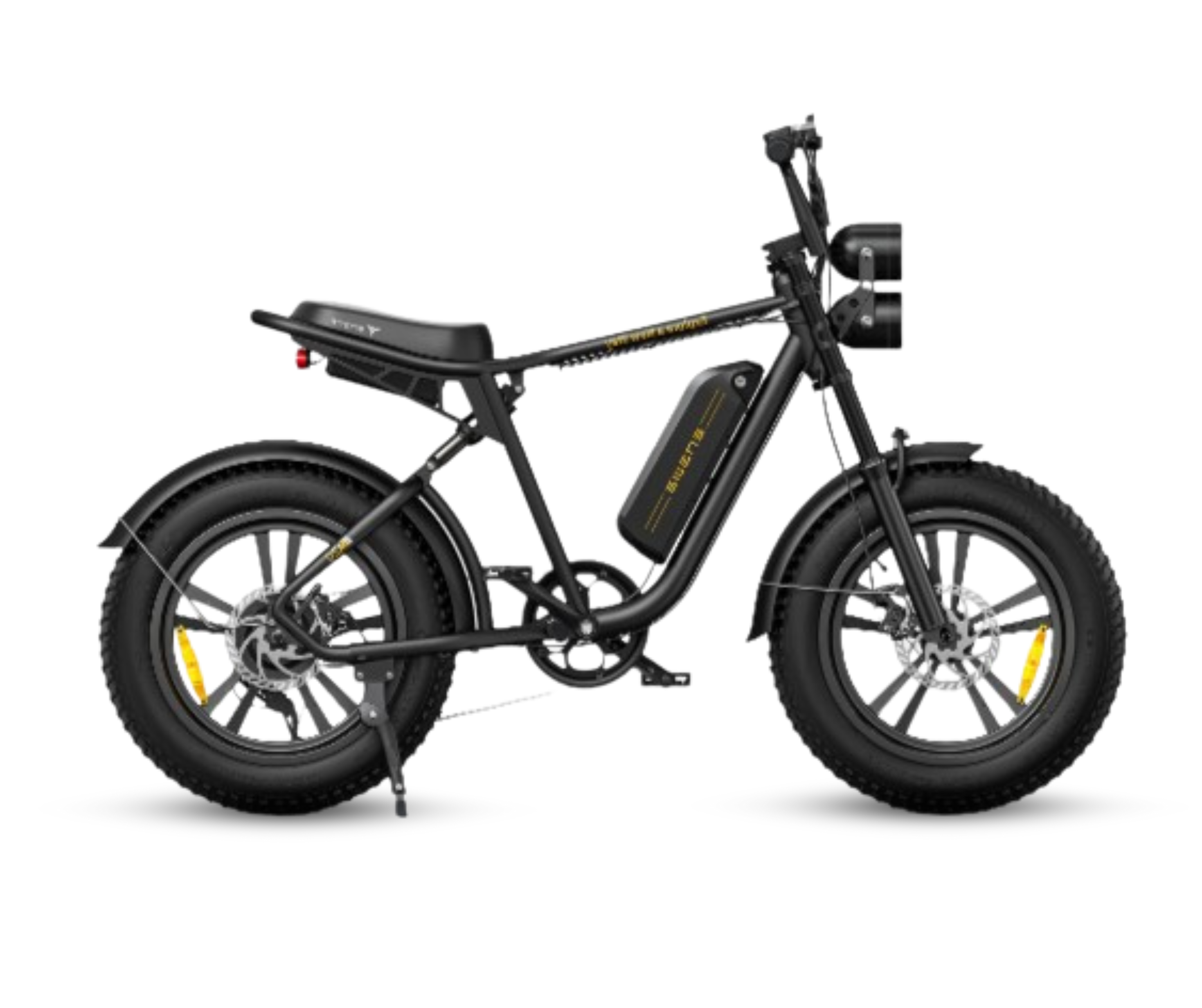

Every year a few bikes arrive with a genuinely new idea rather than a slightly bigger battery. The ADO Air 20 LiDAR is one of them.
It’s a folding e-bike with LiDAR scanning the road ahead and millimetre-wave radar watching behind you — the kind of sensing hardware you’d normally find on a car, not a bicycle. ADO is billing it as the world’s first LiDAR electric bike, and as far as we can tell, that’s fair.
It lands in December 2026, and it’s coming to Uni-trax.
Here’s what it actually does, why it might matter, and the honest questions worth asking before you decide you want one.
What ADO Sense® 3.0 Actually Is
Two sensors, working in opposite directions.
Forward-facing LiDAR (with an integrated gyroscope) scans up to 20 metres ahead, detecting obstacles and changes in the riding environment.
Rear millimetre-wave radar monitors traffic approaching from behind.
Between them they drive four published functions, with specified detection zones:
| Function | Monitoring range |
|---|---|
| Front collision warning | 0.9 m × 20 m |
| Front cross-traffic alarm | 15 m × 6 m |
| Blind spot detection | 5 m × 5 m |
| Lane change assistance | 5 m × 40 m |
If that sounds like car driver-assistance tech, it is. The difference is that on a bike, you have no mirrors, no A-pillars, no metal box — and you’re the most vulnerable thing on the road. Knowing a car is closing from behind before you move out is arguably more valuable on a bike than in a car.
The genuinely clever bit: the radar also detects slopes and shifts gear for you. The bike sees the hill coming and changes down before you’ve started climbing it. That’s a properly novel use of the sensor — not safety theatre, but something that makes the ride easier every single day.
The Rest of the Bike
Underneath the sensors, it’s a well-specified ADO folder:
- BAFANG H730 motor — 36V/250W, 50 N·m, with an integrated 3-speed automatic transmission
- Dual-sided torque sensor
- 37V 10Ah battery (EN50604 certified) — up to 62 miles claimed, 4–6 hour charge
- Carbon belt drive — quiet, clean, no oiling
- Hydraulic disc brakes
- 2.4" IPS colour display with NFC and IPX7 waterproofing
- Hydraulic lockout suspension fork
- MIK-compatible rear rack (25 kg max)
- 20 × 2.0" tyres, aluminium frame, folding pedals
- UK EAPC compliant — 250W, no licence, tax or insurance needed
Three colours: Owl Gray, Horizon Blue, and a Berry Red limited edition — just 36 numbered bikes, allocated in order of payment.
The Honest Questions
We’d rather raise these than pretend a new technology is automatically a good buy.
1. Does rider-assistance tech actually work on a bike?
Car ADAS has had two decades of refinement. Bike-mounted LiDAR has had months. The sensing zones look sensible on paper, but nobody — including us — knows yet how it behaves on a wet London street with a bus three feet away. ADO’s own guidance is appropriately careful: the system provides information to support your decisions, and you should always check your surroundings before changing direction. It’s an extra input, not a replacement for your own eyes.
2. Is it worth the premium?
Pricing hasn’t been officially announced — it’ll go out to the Founder list first. But the sensor hardware isn’t free, and this will sit well above ADO’s existing folders. The Air 20 Ultra 2026 is £1,699 and shares the same BAFANG H730 motor, 3-speed auto-shift, belt drive and torque sensor. So the question is purely: what is the sensing worth to you? For a nervous city rider, possibly a lot. For someone on quiet lanes, possibly nothing.
3. The headlight looks underspecified.
30 LUX is modest. For comparison, bikes at half the price run 40 LUX units. On a bike whose entire pitch is seeing and being seen, that’s an odd place to economise — and if you ride unlit roads, budget for a proper front light.
4. The rack is 25 kg.
Fine for commuting and shopping. Not a cargo bike. If you were hoping to carry a child, look at the Air One Pro instead.
5. No published weight yet.
A folder with LiDAR, radar, a geared hub motor and a suspension fork is unlikely to be light. Worth waiting for a confirmed figure if you carry your bike upstairs.
Who This Is Genuinely For
It makes real sense if: you ride in heavy urban traffic, you’ve had close calls with vehicles coming from behind, you want automatic gears that anticipate hills rather than react to them, or you simply want the most advanced folding e-bike available.
It probably doesn’t if: you ride quiet routes, you’re weight-sensitive, or you want maximum bike for your money — in which case the Air 20 Ultra 2026 gives you the same drivetrain for considerably less.
What Happens Next
ADO is running a Founder programme ahead of the December launch: free pre-registration, with Founder pricing, a one-year price guarantee, a three-year warranty, a Founder kit, and access to the 36 numbered Berry Red bikes for those who register and then buy. Full terms are on ADO’s own site.
We’ll be stocking it at Uni-trax, and we’ll have full pricing, the confirmed weight, and our own honest review as soon as we’ve ridden one. If you want to know the moment it lands, subscribe to our newsletter — you’ll get 10% off your first order too.
And when it arrives, come and ride it. A bike that claims to see the road for you is exactly the kind of thing you should judge from the saddle rather than the spec sheet. We’ll tell you honestly whether the sensors earn their place.
▶ Explore the ADO range at Uni-trax · Find your nearest store
Black Friday is still running until 30 November — BLACKFRIDAY20 for 20% off orders over £900, plus ADO100 for an extra £100 off the ADO collection.